

Lead
Safe
Historic
Windows
Lead-Safe Practices for Historic Windows
If you own an old house in Rhode Island, there is a good chance someone has told you that your windows are a lead paint problem, and that replacing them is the only way to solve it. That is not true. And this misconception is doing real harm to historic buildings across the state. Lead paint in old windows is not inherently dangerous. What creates hazards is deteriorated paint, poorly operating windows that grind and shed dust as they open and close, and surfaces that have been neglected to the point of flaking or peeling. When those conditions are addressed through proper restoration, the lead hazard is resolved, and the window is preserved. The two goals are not in conflict. They support each other. Heritage Restoration has been making historic windows lead safe for more than two decades. We understand how these windows are built, how they fail, and how to bring them back to safe, smooth operation without sacrificing the materials that make them worth saving.
What "Lead Safe" Actually Means
A window is considered lead safe when deteriorated paint has been stabilized, friction and impact points have been corrected so the window operates without grinding or generating dust, and proper cleanup practices have been followed throughout the process.
That is the standard. It does not require stripping every surface down to bare wood. It does not require replacement. It requires that the conditions producing lead dust with friction, deterioration, and poor operation be identified and corrected. A window that opens and closes smoothly, with sound paint and properly maintained glazing, meets that standard. That is exactly what a well-restored historic window is.
Why Replacement Is Not the Answer
Rhode Island updated its lead hazard laws in 2023, and the impact has been significant. Homeowners across the state began receiving pressure from inspectors and window salespeople suggesting that old windows would automatically fail lead inspections and that replacement was the only viable path forward.
This is a misreading of the law, and it has led to unnecessary removal of irreplaceable historic material throughout the state.
Historic windows were built to last centuries. They are made from old-growth wood that is far denser and more durable than anything available today, and their weight-and-pulley systems, when properly maintained, are among the most reliable window mechanisms ever designed. When they fail lead inspections, it is rarely because they cannot be made safe. It is because they have been neglected, painted shut, or operated under friction for so long that the paint surfaces have deteriorated.
Replacing them with vinyl or aluminum units does not solve the underlying problem. It erases the history of the building, permanently removes material that cannot be reproduced, and often costs as much as or more than a proper restoration, particularly in historic districts where replacement windows require approval and must meet strict dimensional and material standards.
Restoration addresses the actual problem. Replacement just covers it up.
Heritage Restoration's Approach
Heritage Restoration does not offer lead-safe remediation as a standalone service. What we do is full window restoration, and when it is done properly, lead-safe outcomes follow naturally.
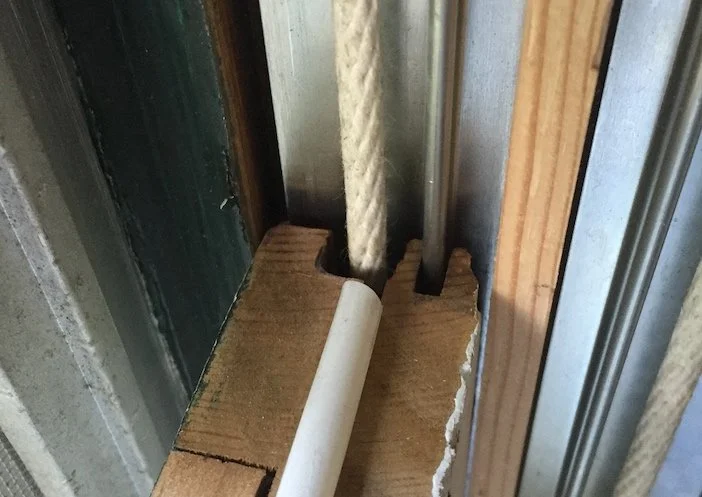
When we restore a historic window, we address every condition that creates a lead hazard. We strip, repair, and refinish deteriorated surfaces. We correct friction points and rebuild components that are causing the sash to bind or grind. We re-glaze and repaint with appropriate coatings. When the work is complete, the window operates smoothly, and all painted surfaces are stable and cleanable. It is, by definition, lead safe.
We developed this approach in collaboration with the Rhode Island Department of Health, working through the specific mechanics of how historic windows operate and identifying exactly where friction and impact occur so they can be eliminated. That work later informed the guides we developed for the City of Newport and the Newport Restoration Foundation, resources now used by homeowners, contractors, and preservation professionals across the state.
The Lead Safe Historic Window Guides
In response to the confusion created by Rhode Island's expanded lead laws, Heritage Restoration was commissioned by the City of Newport and the Newport Restoration Foundation, with funding from the National Park Service and the National Trust for Historic Preservation, to develop a practical resource for homeowners and professionals navigating the compliance process.
The result is two companion documents: a Homeowner and Landlord User Guide written in plain language for property owners who want to understand their obligations and advocate for their windows, and a Research and Support Manual for preservation professionals, lead inspectors, and code officials who need technical depth and regulatory context.
Rob Cagnetta, President of Heritage Restoration, was invited by the Rhode Island Department of Health to present this guidance in a webinar for lead inspectors statewide, recognizing how significantly this work has shaped the conversation around historic windows and lead compliance in Rhode Island.
Both guides are available as free public resources.
If Your Windows Have Been Flagged for Lead
If a lead inspector has told you that your historic windows need to be replaced or that they will automatically fail inspection, reach out before making any decisions. In most cases, there is a better path, one that resolves the lead hazard, meets the compliance standard, and keeps the original windows intact.
We are glad to talk through what you are dealing with and help you understand your options. There is no obligation in that conversation, just honest guidance from people who have been doing this work for a long time.