

Lead Paint Adaptation & Remediation Resources
Helping homeowners, landlords, and professionals choose the right guide for their needs
Lead-Safe Historic Window Resources
Historic windows often contain lead paint, but that does not mean they need to be thrown away. The City of Newport, the Newport Restoration Foundation, and Heritage Restoration worked together on a project to help property owners and professionals make historic windows lead-safe while preserving their character.
As part of that work, two companion documents were created:
A Homeowner and Landlord User Guide
A Research and Support Manual for professionals
This page explains the difference between the two and how each can be used.
Which Resource Should I Use?
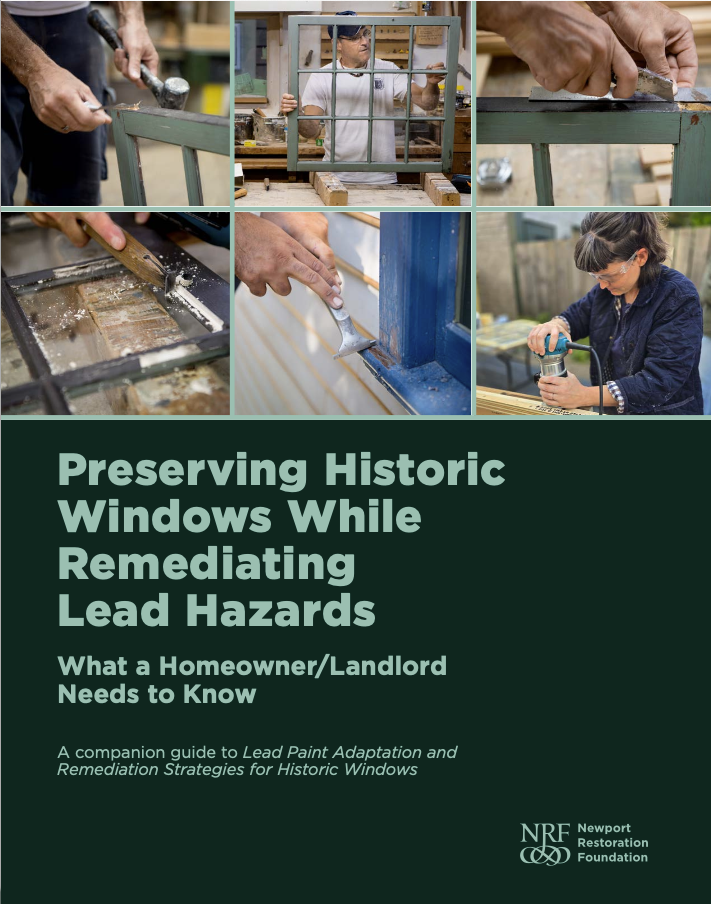
1. Homeowner and Landlord User Guide
“Preserving Historic Windows While Remediating Lead Hazards: What a Homeowner/Landlord Needs to Know”
This guide is written for:
Homeowners and small landlords
Property managers
General contractors who want a clear starting point
It focuses on:
How to recognize lead hazards at windows
Simple explanations of friction, impact, and deteriorated paint
Practical strategies like paint stabilization, encapsulation, enclosure, and targeted repairs
How to find and work with licensed lead inspectors and contractors
Financial resources and programs that may help with mitigation costs
The tone is straightforward and practical. A motivated property owner or landlord can use this guide to:
Understand their obligations
Talk more confidently with inspectors and contractors
Advocate for repair and safe operation instead of automatic window replacement
This is the best resource to share publicly with your website visitors.
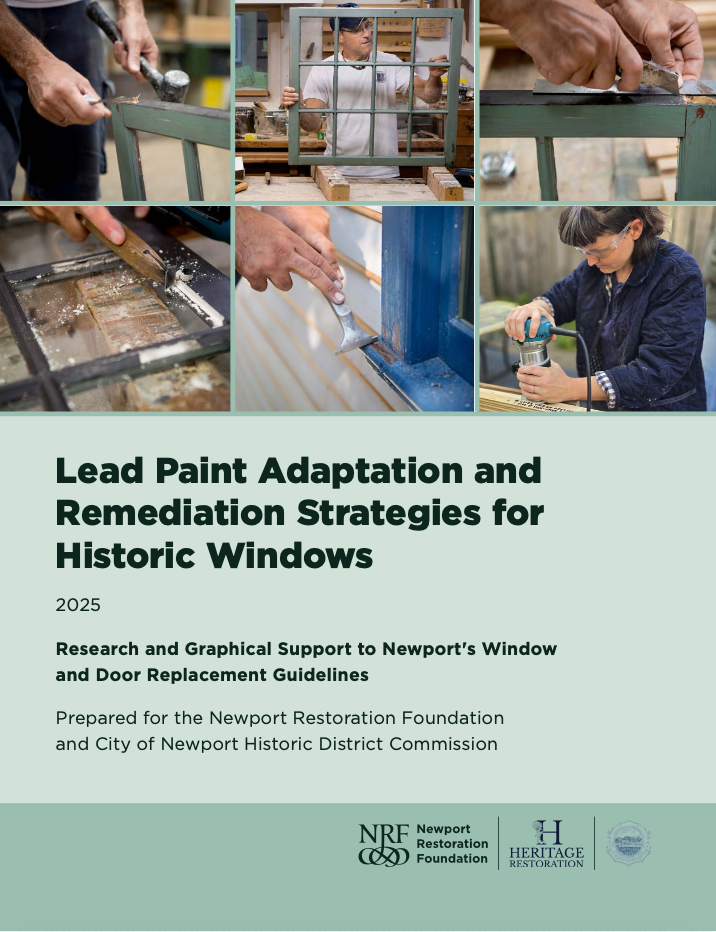
2. Lead Paint Adaptation and Remediation Strategies for Historic Windows
Research and Graphical Support to Newport’s Window and Door Replacement Guidelines (Research & Support Manual)
This manual is written for:
Preservation professionals
Lead inspectors and code officials
Architects, designers, and consultants
Municipal staff and policy makers
It includes:
Background on Rhode Island lead laws, enforcement, and penalties
Definitions of lead hazards and federal dust standards
Detailed diagrams of historic window types, parts, and balance systems
Component-by-component remediation strategies for friction and impact surfaces
Case studies of mitigated historic windows
A step-by-step description of the inspection and certification process
The tone is more technical and detailed. It is meant to support:
Professional practice and policy decisions
Deeper understanding of how to retrofit historic wood windows
Coordination between inspectors, preservationists, and property owners
This is a reference document for professionals, not a general homeowner guide.
Homeowners, landlords, small property owners, general contractorsPreservation professionals, inspectors, architects, policy makers
Help people make historic windows lead-safe and pass inspection without unnecessary replacement
Plain language, practical, step-by-step
Spotting hazards, choosing strategies, working with inspectors and contractors, financial resources
Public-facing downloadable guide for everyday users
On this website as a public resource
Preservation professionals, inspectors, architects, policy makers
Provide evidence, technical methods, and policy context for lead-safe strategies on historic windows
Technical, detailed, diagram-heavy
RI lead laws and standards, window typologies, detailed remediation strategies, case studies, inspection process
Professional reference, training, and policy support
Internally, or upon request for professionals
Main audience
Goal
Tone
Key topics
Best use
Where to share
Acknowledgments and Funding
This project reflects the work and support of many people and organizations.
Project collaborators
Newport Historic District Commission
Heritage Restoration, Inc.
City of Newport, Rhode Island
Newport Restoration Foundation
The guides were prepared by Heritage Restoration, Inc. for the Newport Restoration Foundation and the City of Newport Historic District Commission, as part of a broader effort to support lead-safe housing while preserving historic windows.
Project funders
The project is supported by:
The National Park Service Certified Local Government Program, administered by the Rhode Island Historical Preservation and Heritage Commission
The National Trust for Historic Preservation
Required funding acknowledgment
“The activity which is the subject of this Report has been financed in part with federal funds from the Department of the Interior, National Park Service administered by the Rhode Island Historical Preservation and Heritage Commission. The contents and opinions contained herein do not necessarily reflect the views or policies of the Department of the Interior or the Historical Preservation and Heritage Commission. The project is additionally funded by the National Trust for Historic Preservation.”
Equal opportunity statement
“This program receives Federal funds from the National Park Service. Regulations of the U.S. Department of the Interior strictly prohibit unlawful discrimination in departmental Federally assisted programs on the basis of race, color, national origin, age, or handicap. Any person who believes he or she has been discriminated against in any program, activity, or facility operated by a recipient of Federal assistance should write to: Director, Equal Opportunity Program, U.S. Department of the Interior, National Park Service, P.O. 37127, Washington, D.C. 20013-7127.”