

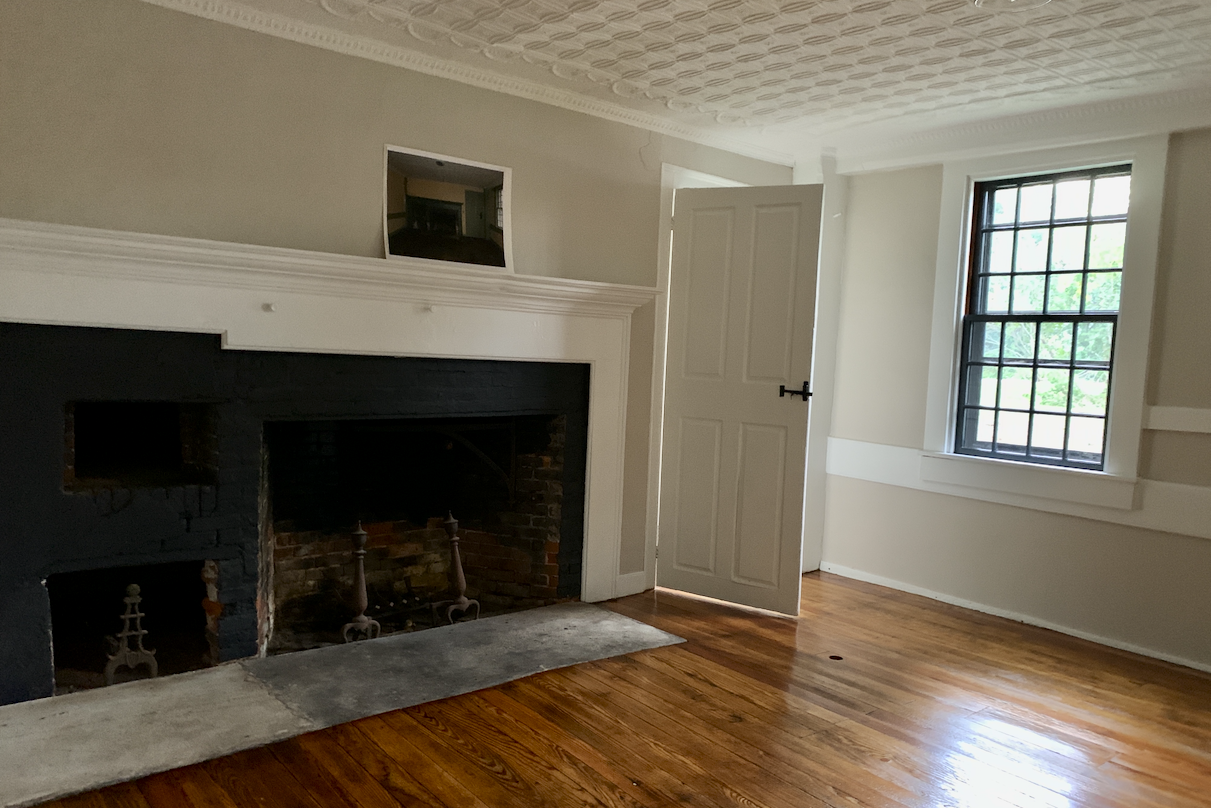
Historic Interior Restoration
A building's interior is where its character is most fully expressed. The woodwork, the finishes, the staircases and mantles and moldings, the proportions of the rooms themselves. All of it reflects the craftsmanship and the design choices that make an old home what it is. Our goal is to protect that character while helping owners adapt their spaces for comfort, longevity, and the way people actually live today.
Every project starts with understanding how the owner uses the building. What works, what does not, and what has to be preserved. From there we repair historic features, integrate new components where they are needed, and maintain the architectural continuity that gives a home its sense of place.
Interior Restoration & Preservation
Our team restores and recreates interior architectural elements with care and precision. Depending on what the space needs, that work may include:
Matching historic trim, casings, profiles, and moldings
Repairing or rebuilding staircases, railings, and balusters
Restoring mantles, wainscoting, and paneling
Fabricating custom cabinetry and built-ins
Repairing framing where interiors have been altered or damaged
Reproducing missing or deteriorated architectural details
We use traditional methods and modern tools together, whatever the job actually calls for. The test of good interior work is simple. When a new molding goes in next to one that has been there for a hundred years, you should not be able to pick out which is which.
Making an Old Interior Work Today
Historic interiors often need subtle adjustments to function well today. The trick is making those changes without damaging what makes the building worth living in. We improve circulation and room flow, modify spaces to bring in more natural light, integrate electrical, mechanical, and HVAC upgrades discreetly, and add storage or built-ins where they make sense. We also prepare spaces for accessibility and aging in place, and we address the hidden problems that almost always turn up once an old interior is opened up.
Every one of those decisions balances building science, construction practicality, and preservation. A change that makes a room more comfortable is not worth much if it quietly harms the building over time.
Finishes That Last
Finishes matter for both durability and appearance, and they are easy to get wrong. Working closely with our sister company, Sutherland Welles, we select finishes based on the environment, the material, and what the owner is after. Custom dyes, stains, oils, and coatings, chosen and applied with a real understanding of how wood behaves over time. Done right, the finish ages beautifully and protects the interior for decades rather than peeling or yellowing a few years in.
Respecting the Past, Enhancing the Present
Whether we are restoring a single room or improving an interior as part of a larger project, the approach is the same. Care, craftsmanship, and a clear understanding of the building's history. The work strengthens the building's integrity while keeping its interiors inviting, functional, and true to their original design
Common Questions About Historic Interiors
Should I keep my plaster walls or replace them with drywall?
Keep the plaster if you can. It is almost always worth saving. Plaster is a hand-applied finish that performs better than drywall in ways most people do not realize. It blocks sound far more effectively, holds up better against fire, and carries roughly double the insulating value of half-inch drywall. It also does not harbor mold the way paper-faced drywall can. Most plaster that looks like it needs to be torn out actually just needs to be reattached to the lath and patched, which is a fraction of the cost and disruption of gutting a room. There are cases where replacement makes sense, usually serious water damage or plaster that has failed completely, but those are the exception. When walls need to come apart to update wiring or plumbing, we can cut selective channels rather than demolishing the whole surface.
How much does it cost to repair plaster walls and ceilings?
It depends on the damage. Minor cracks and nail holes are inexpensive to address. Crumbling sections, water damage, or plaster that has pulled away from the lath cost more because of the labor involved. Ceilings generally cost more than walls because the work is harder and slower. The honest answer is that repair is almost always far cheaper than tearing everything out and replacing it with drywall, and it keeps the character and the performance of the original wall. Before we quote anything, we look at what is actually going on behind the surface, because a sagging ceiling or a recurring crack is often a symptom of something else, like a water source or failing lath, that needs to be addressed first.
How do you match historic trim and molding?
A few ways, depending on the situation. Sometimes, there is a stock profile close enough to work. More often, the original profile is something you cannot buy anymore, so we trace it with a profile gauge and either build it up by combining stock pieces or have a custom knife ground to mill it exactly. Matching the wood species and grain matters as much as matching the profile, because the wrong wood will announce itself the moment it is finished. Custom milling has setup costs, so it is most economical when there is a fair amount of trim to run, but for a historic interior, it is often the only way to get it right.
Should I paint my original woodwork or keep it natural?
It depends on the wood. High-quality stain-grade woodwork, the kind often found in living and dining rooms, is usually worth keeping natural and restoring. Lower-grade wood that was always meant to be painted, often in bedrooms and secondary spaces, is fine to paint. If the existing finish is just tired rather than damaged, you can often refresh it without stripping everything down to bare wood. When a finish does need renewing, the choice of finish matters. Through our sister company, Sutherland Welles, we work with polymerized tung oil finishes that penetrate and protect the wood from within. Unlike polyurethane, they will not crack or peel, and unlike some older oils, they will not yellow over time. They are also easy to repair down the road, which matters when you intend to keep them for another century.
Can you refinish hundred-year-old hardwood floors?
Usually, yes, and they are almost always worth saving. Old floors tend to be old-growth wood that is denser and better than what you can buy today. The main thing we check is whether the floor has been over-sanded in the past, which limits how many times it can be refinished. For old floors, a penetrating oil finish often looks and performs better than a surface coat of polyurethane, which can sit on top of the wood and look plastic. Where boards are damaged beyond saving, we can replace and blend them in so the repair disappears into the original floor.

Living room before

Living room after

DeWolf Room before

DeWolf room restored

Staging room for window restoration

Completed room

Main hall before

Main hall after

1960's kitchen inside 1893 ell

New Catalog kitchen in 1893 ell