

Why the Wrong Mortar Is Destroying Old Brick
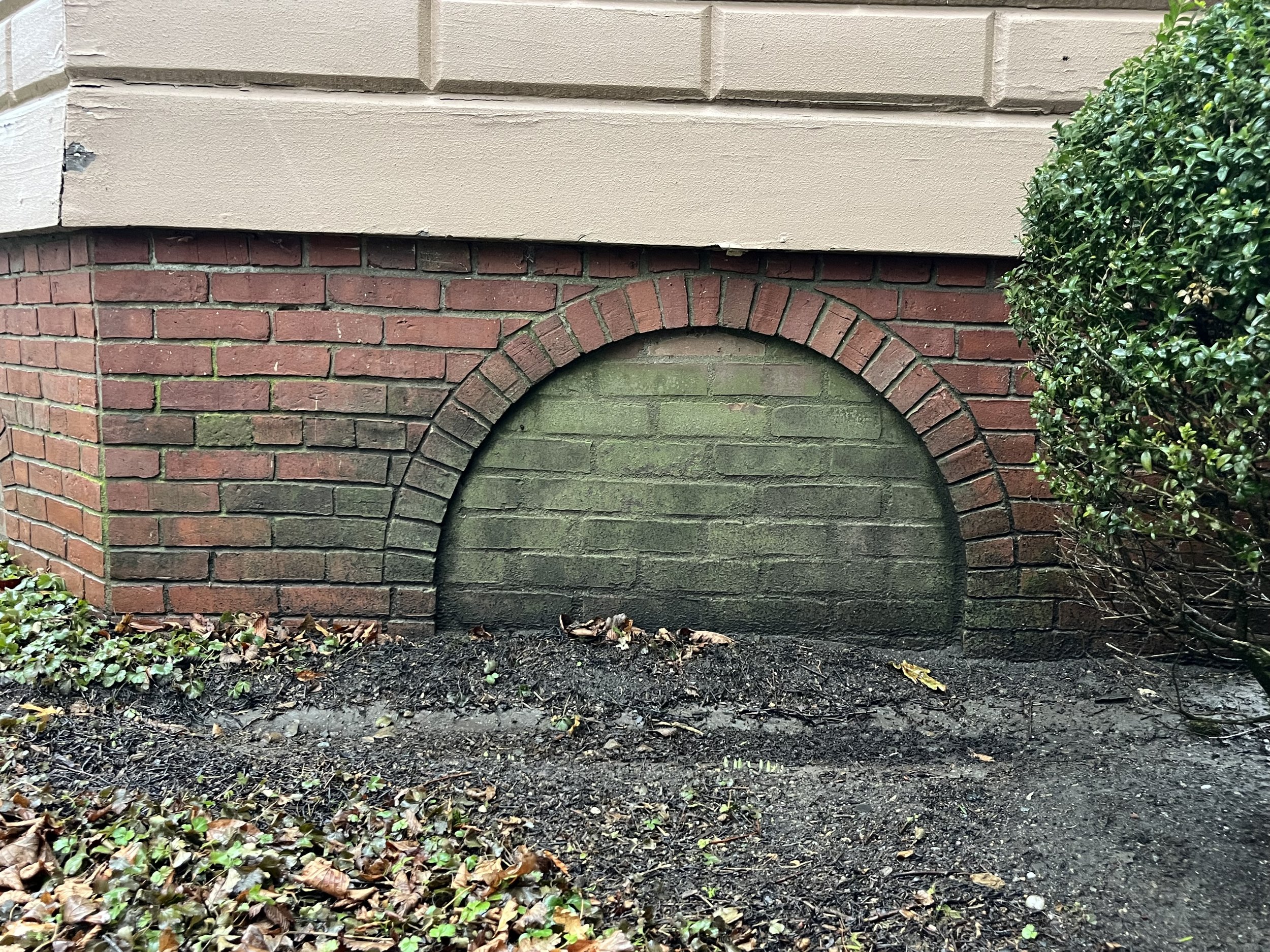
If the brick on your old building is crumbling, flaking, or losing its face, the cause is often not what you would expect. It is usually not age, and it is usually not neglect. More often than not, it is a repair. Someone repointed the wall at some point with the wrong mortar, and that well-meaning fix has been slowly destroying the brick ever since.
It is one of the most common and most damaging mistakes we see on old buildings, and almost nobody realizes it is happening until the damage is done.
How an Old Wall Is Supposed to Work
To understand the problem, you have to understand how an old masonry wall was designed to behave, because it is not how most people assume.
Historic brick is soft. It is more porous and less dense than the hard, uniform brick made today, and it was laid with soft lime mortar to match. That softness was not a shortcoming. It was the entire point. The mortar was meant to be the weakest part of the wall, the part that gives.
An old wall moves a little with the seasons, and it takes on moisture when it rains. Soft lime mortar handles both. It flexes slightly instead of cracking, and it lets water pass through and evaporate back out. When the mortar eventually wears down, and it is supposed to, you repoint it. The joints take the wear so the brick does not have to. For a couple hundred years, that is exactly how these walls have survived.
What Happens When You Use the Wrong Mortar
Modern Portland cement mortar breaks that whole system.
Cement is hard. It is much harder than old brick, and that is the problem, even though it sounds like a strength. Hard mortar will not flex with the wall, and it will not let moisture pass through the way lime does. So when water gets into the wall, and water always gets into the wall, it cannot escape through those dense cement joints anymore.
It finds the only way out it has left. It escapes through the brick.
In a climate like Rhode Island’s, that is where it turns destructive. The moisture trapped in the brick freezes over the winter, expands, and pushes the face of the brick apart from the inside. You see it as flaking, crumbling, and spalling, where the surface of the brick pops off entirely. The cruel part is what survives. The hard cement joints come through fine, standing there intact, while the original brick, the part you cannot replace, is the part falling apart.
The mortar was supposed to be the sacrificial piece. The wrong mortar flips that and sacrifices the brick instead.

Why This Keeps Happening
None of this is usually done out of carelessness. It happens because cement is what most of the trade knows.
Portland cement is what general contractors use every day; it is what sits on the shelf at any supply yard, and it looks and feels stronger, so choosing it seems like the responsible call. Unless someone has worked specifically with historic masonry, there is no reason they would know that old walls follow a completely different set of rules. So the damage gets done by people who genuinely thought they were making the building better.
That is why so much of the harm we repair started as a repair.
What to Do If You Own Old Brick
The good news is that this is avoidable, and even some existing damage can be addressed before it spreads.
If your brick is already failing, the most important thing is to stop further “repairs” until someone who understands old masonry has looked at it. More cement will only accelerate the problem. If you are planning to repoint, the single thing that matters most is that the new mortar matches the original. Soft brick needs soft lime mortar, mixed and applied to suit that specific wall.
A few questions will tell you quickly whether someone is the right person for the job:
Will they match the mortar to the original rather than using a standard cement mix?
Do they understand why lime mortar matters on a soft-brick wall?
Can they explain how they will handle moisture and movement in the wall?
If the answer to any of those is a blank look, keep looking. Repointing historic masonry is not the same work as repointing a modern wall, and the difference shows up in the brick for decades afterward.
An old brick wall that has stood for two centuries can stand for two more. It just needs to be cared for the way it was built, with the mortar doing the job it was always meant to do.
If you have old brick you are worried about, or you are planning to repoint and want it done right, we are glad to take a look and tell you honestly what it needs.
