

Historic Roofing
Few parts of a building work harder than the roof, and few places in the country are harder on a roof than New England. A roof here has to handle blazing summer sun, freezing winter nights, heavy snow, ice, wind-driven rain, and the freeze-thaw cycle that comes from all of it happening sometimes in the same week. A roof that is designed and built right protects everything beneath it. A roof that is not becomes the source of the worst damage an old building can suffer.
Heritage Restoration works with trusted roofing specialists who understand historic buildings and traditional construction. Together, we treat the roof as a complete system rather than just a surface, because that is the only way to keep water out of an old building for good.
Roofing on an Old Building
Is Not Just a Surface
A historic roof is a defining part of the architecture, not just a covering. Slate, wood shingles, metal, copper details, and early asphalt each tell part of the story of how and when a building was made. And because old buildings breathe, expand, and drain differently than modern ones, the roofing has to respect how the original envelope was meant to work.
Before any roofing work, we look at the whole picture. The condition and remaining life of the existing material. The structure underneath and what it can carry. How air moves through the roof and attic. The flashing at every transition. How the gutters, fascia, and drainage all interact. What previous repairs may have been done, for better or worse. Looking at all of it together is what prevents the next moisture problem instead of just patching the last one.
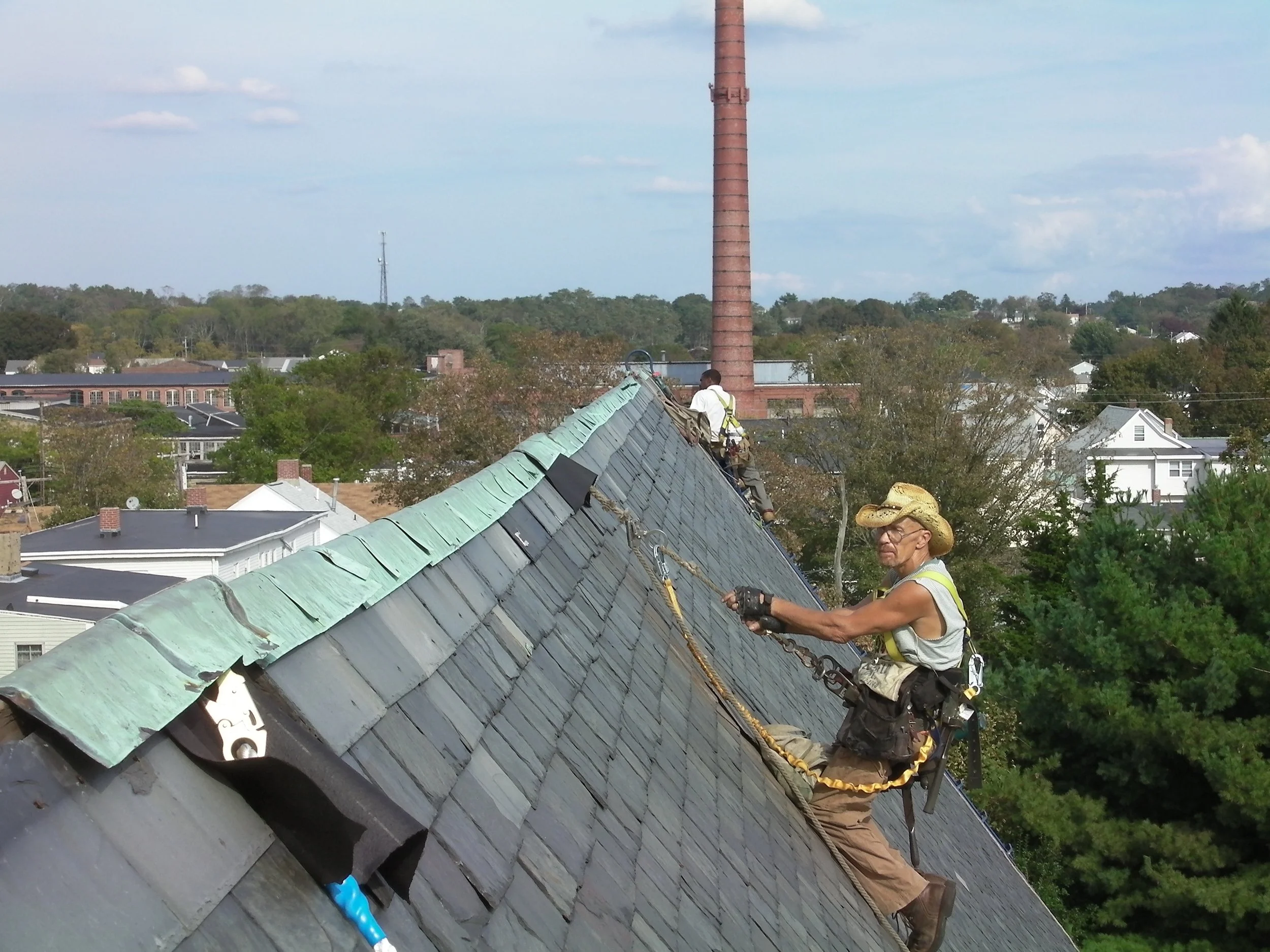

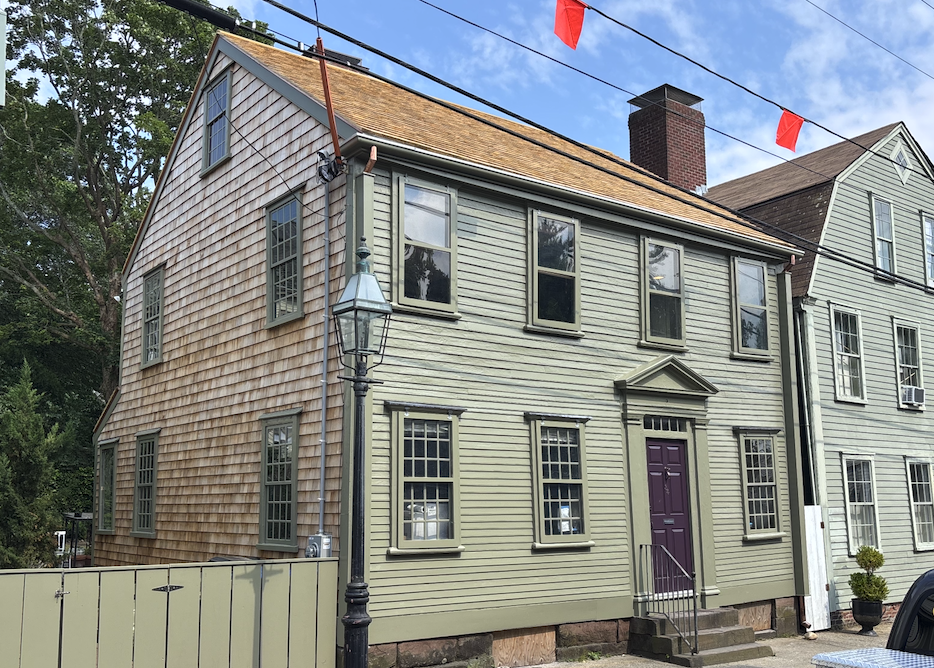
Our Roofing Services
Heritage Restoration coordinates with skilled roofing partners to provide:
Slate repair and replacement
Wood shingle and shake roofing
Standing-seam and flat-lock metal roofing
Asphalt shingle systems for historic homes
Copper valleys, ridges, and flashing
Chimney and wall flashing detailing
Gutter and downspout integration
Rot repair and fascia reconstruction
Ice-dam and moisture management solutions
Every project is tailored to the building’s age, materials, and architectural style.
Flashing, Drainage & Water Management
A roof is only as good as its flashing and drainage. Incorrect or missing flashing—and gutters that don’t move water away—lead to rot, interior leaks, mold, and structural damage. We ensure every transition is properly executed and every water path is controlled.
This includes:
Roof-to-wall transitions
Valleys, ridges, dormers, and penetrations
Integrated gutter systems
Drainage planes and moisture pathways
Proper detailing can preserve a roof—and the home beneath it—for a century or more.
A Historic Roof Is Part of the Architecture
The roof is one of the most visible features of an old building, and the material it was built with is part of how that building reads. Slate, wood shingles, metal, copper detailing, and early asphalt all belong to specific periods and styles, and swapping one for another changes the character of the whole house. Old buildings also breathe, expand, and drain differently than modern ones, so the roofing has to work with the original envelope rather than fight it.
That is why we start by understanding the entire roof before we touch it. We assess the condition and remaining life of the existing material, evaluate whether the structure beneath can carry it, and study how air moves through the roof and attic. We check the flashing at every transition and trace how the gutters, fascia, and drainage work together, and we take into account whatever past repairs have been done to the roof along the way. Understanding all of it at once is what lets us solve the cause of a moisture problem instead of chasing the symptom.
What We Do
Working with skilled roofing partners, we handle:
Slate repair and replacement
Wood shingle and shake roofing
Standing-seam and flat-lock metal roofing
Historically appropriate asphalt shingle systems
Copper valleys, ridges, and flashing
Chimney and wall flashing
Gutter and downspout integration
Rot repair and fascia reconstruction
Ice dam and moisture management
Every project is shaped by the building's age, its materials, and its architecture.
Flashing and Water Management
A roof is only as good as its flashing and its drainage. Most roof leaks do not come from the middle of the roof. They come from the transitions, the places where the roof meets a wall, a chimney, a valley, or a dormer, and those are exactly the places where flashing does its job. Missing flashing, the wrong flashing, or flashing that was caulked in place instead of properly woven into the roof leads to rot, interior leaks, mold, and eventually structural damage.
We make sure every transition is detailed correctly, and every path the water can take is controlled, from roof-to-wall connections to valleys, ridges, dormers, and penetrations, through the gutters, and away from the building. On a historic roof, copper flashing is worth the investment because it lasts as long as the roof does. Done right, proper flashing and drainage can protect a roof, and the building under it, for a century or more.
Traditional Materials, Lasting Performance
A historic roof should do two things at once. Perform reliably and respect the character of the building. Sometimes that means repairing a single slope, sometimes a full replacement, and sometimes reproducing a historically correct roof that was lost to a bad decision decades ago.
We follow the guidance laid out in the National Park Service Preservation Briefs on historic roofing, which comes down to a simple principle. Keep and repair the original where you can, and when you cannot, match it in material, scale, and detail. That is how the roof ends up protecting the building without erasing what makes it worth protecting.
Common Questions About Historic Roofs
How long does a slate roof last?
A properly installed slate roof lasts a very long time, generally 60 to 125 years or more, depending on the type of slate, and some have lasted well over 200 years. Vermont and New York slate tends to last around 125 years, Pennsylvania soft-vein slate around 60, and premium Buckingham Virginia slate 175 years or more. Here is the part most people do not expect, though. The slate itself usually outlasts the nails and flashing that hold the roof together. So a slate roof that looks like it is failing often does not need new slate at all. It needs the old slate carefully removed, sound pieces reused, and new flashing and underlayment installed beneath them. That is a re-slate, and it can give an old roof another lifetime.
What causes ice dams, and how do I prevent them?
An ice dam forms when heat escaping from the house warms the upper part of the roof, melts the snow sitting on it, and that meltwater runs down to the cold edge of the roof and refreezes. The ice builds up into a dam, and water backs up behind it and under the roofing. The important thing to understand is that the real cause is not the roof or the gutters. It is warm air leaking up into the attic. So the fix works from the inside out. Air-seal the attic floor first, add enough insulation, and make sure the attic has balanced intake and exhaust ventilation so the roof stays cold. Heat cables along the eaves are a band-aid. They create a drainage channel, but they do nothing about the cause, and they can shorten the life of the roof. If a dam has already formed, the only safe way to remove it is with low-pressure steam. Never use a hammer, rock salt, or a pressure washer on it.
What is roof flashing, and why does it leak?
Flashing is the metal that protects the transitions on a roof, the spots where it meets a wall, a chimney, a valley, or a dormer. Its whole job is to direct water back onto the roof surface and keep it out of those vulnerable joints. Most roof leaks start at the flashing, not in the open field of the roof. The usual culprits are flashing that was caulked in place instead of properly layered into the roofing, old flashing that was reused under a new roof, or flashing that has simply corroded over time. On a historic roof, we use copper for the critical flashing because it lasts as long as the slate or the metal roof it protects, so you are not back up there redoing it in fifteen years.
What is the best roofing material for an old house?
Usually, the best material is the one the house was originally designed for. Old buildings were built around their roofs, and the roof shape, pitch, and material are part of the architecture. The original is often easy to identify. If the attic has gapped boards rather than solid sheathing, the house almost certainly started with wood shingles. Solid sheathing points more toward slate or asphalt. The National Park Service guidance on historic roofing comes down to keeping and repairing the original material where possible, and matching it in scale, texture, and color when replacement is unavoidable. A significant slate roof should not be stripped off and replaced with asphalt to save money in the short term, because it changes the whole character of the building and usually costs more over the life of the roof anyway.
Should I repair or replace my slate roof?
The general rule preservation professionals use is straightforward. If less than about 20 percent of the slate is broken, cracked, missing, or sliding, and the roof is otherwise in good shape, repair it. Once you get past roughly 20 percent, it usually makes more sense to replace or re-slate the whole slope than to keep chasing individual repairs. The other thing that matters is the type of slate. Hard slate may have decades of life left and is well worth repairing, while soft slate that has reached the end of its life is a different conversation. One broken slate left alone is not just one broken slate, though. Water gets in, the deck below starts to rot, and a small, timely repair turns into a big one. Slate roofs reward staying on top of the little things.