
Millwork
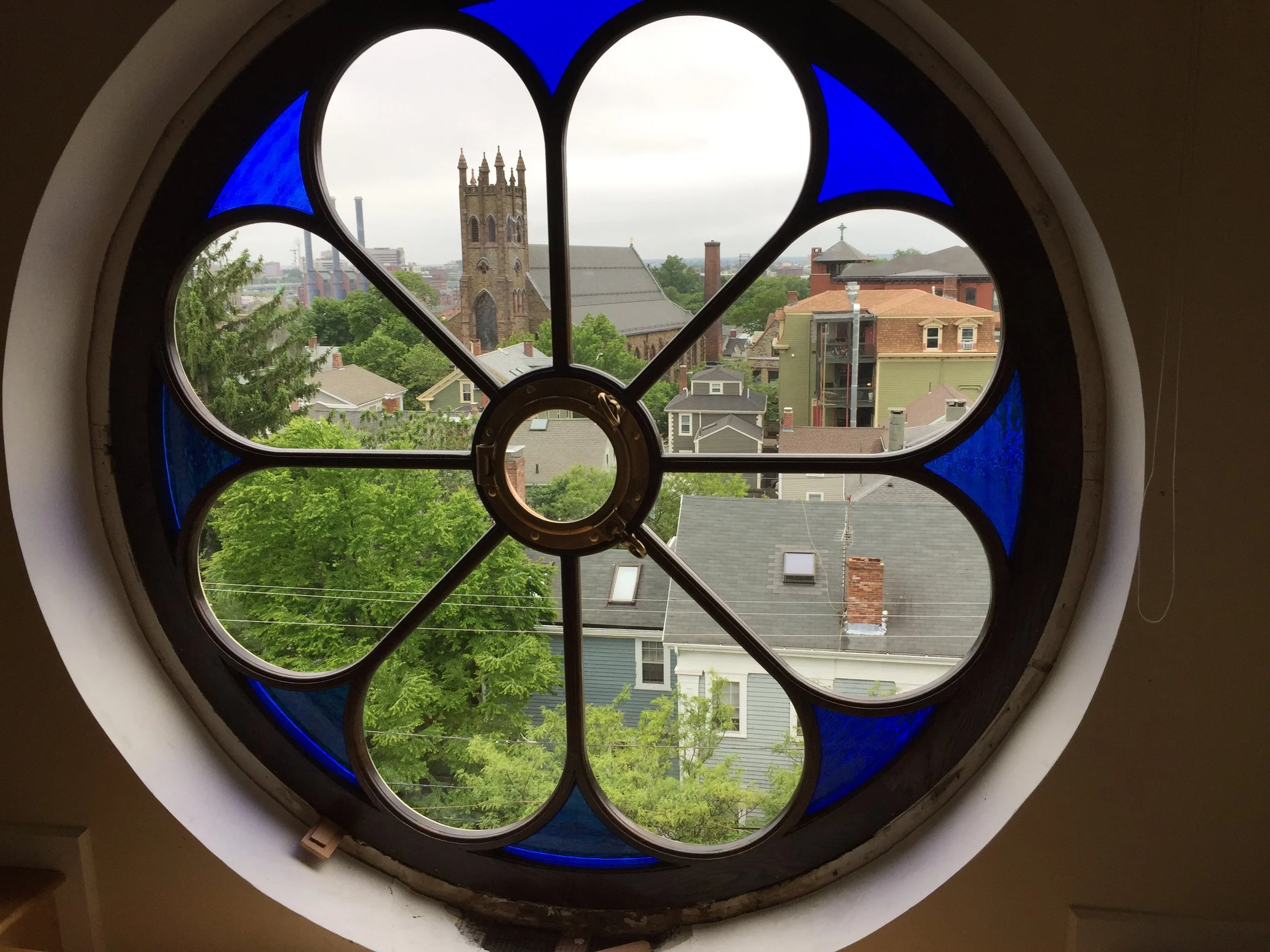
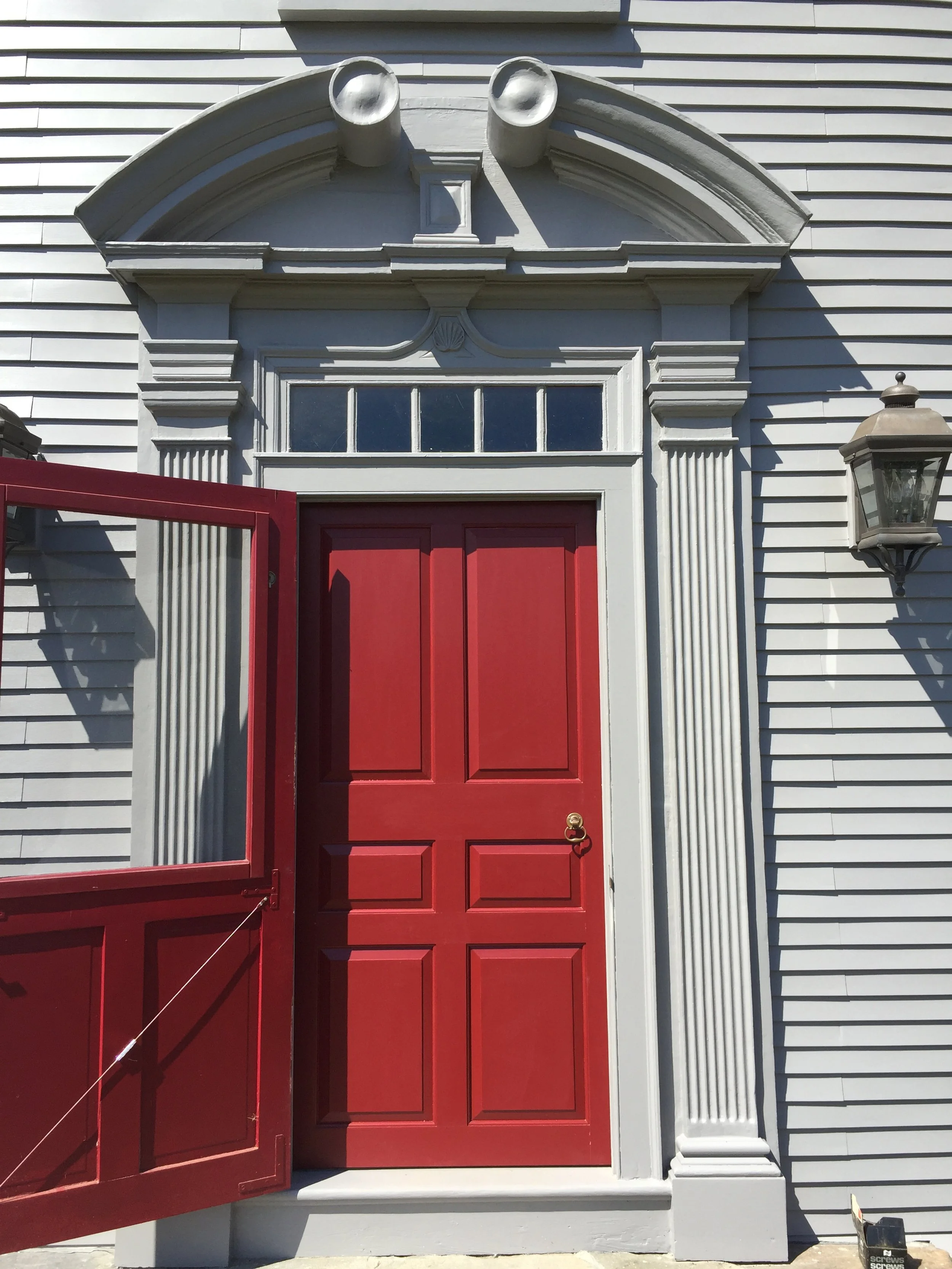
Rhode Island has some of the most architecturally diverse building stock in the country. From first-period plank-frame windows to elaborate eighteenth and nineteenth-century door surrounds, from Colonial mantles to intricate Victorian moldings, each house carries the hand of its original maker.
When those details are damaged or missing, they cannot be ordered from a catalog.
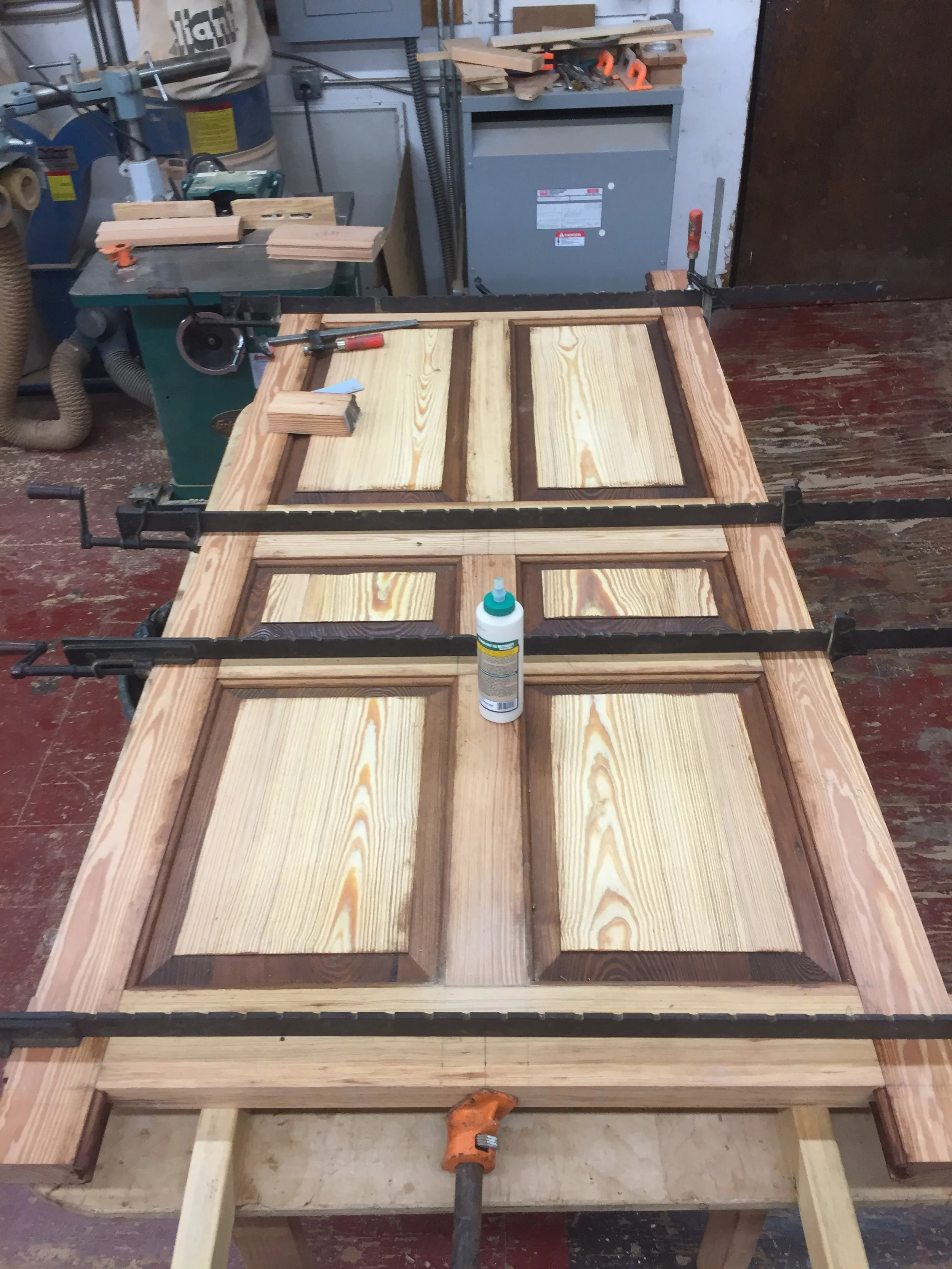
Heritage Restoration's millwork shop reproduces and creates custom wood components for old buildings. Windows, doors, moldings, mantles, jambs, balusters, and cabinetry were typically made by local craftspeople. Each piece carried profiles and proportions specific to that building and that era. Before any cutting begins, we document those details carefully, recording profiles, wood species, and joinery methods so the reproduction matches what was there.
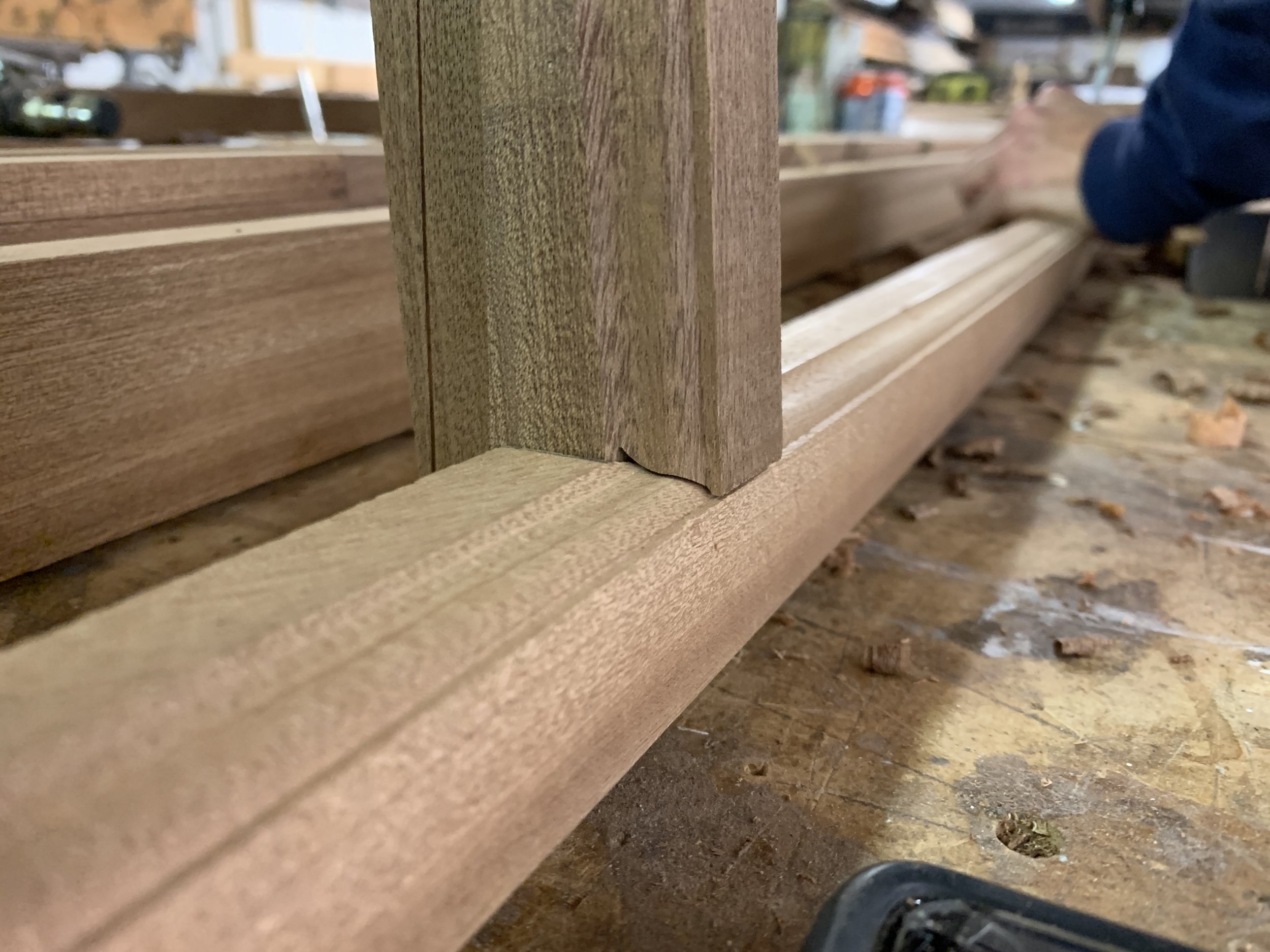
True mortise-and-tenon construction is at the center of how we build. It is how wood joinery was done for centuries because it works.
Every piece is built in our Providence shop to fit the specific building it is going into.
Common Questions About Millwork
What is custom millwork, and how is it different from the trim I can buy at a store?
Millwork is any wood building component shaped to a specific profile, things like moldings, casings, mantels, balusters, and paneling. The difference between custom and store-bought comes down to where the profile comes from. Stock trim is made in a handful of standardized shapes that have been simplified over the years to be easy to mass-produce. Custom millwork is shaped to match a specific profile, which is what an old house needs, because the trim in an old building was milled to the proportions that the builder or architect chose for that house. It was never one of a few off-the-shelf options, so the only way to match it properly is to reproduce it rather than buy the closest thing available.
Can you match molding that isn't made anymore?
Yes, and most of the historic molding we reproduce is no longer made by anyone. The process starts with documentation. We capture the exact cross-section of the original profile, either with a profile gauge that conforms to the shape or by removing a short sample from a hidden spot, and then we translate that into a knife that can mill the same profile again. Matching the outline is only part of it. The proportions and the wood species have to match, too, because even a sixteenth of an inch off on a complex profile reads as wrong from across the room. The goal is to reproduce what the original maker actually built, not to get close.
How are custom moldings actually made?
A steel knife is ground to the exact shape of the profile, then run on a shaper or molder to produce continuous lengths of the molding. The first thing a good shop does is check its existing library of knives, because if we already have one that matches your profile, it saves both the tooling cost and the wait. When nothing matches, which is common with historic work, we grind a new knife to match the traced profile or the sample. That knife then becomes part of the library, so if you ever need more of the same molding down the road, it can be run again. All of this happens in our shop in Providence, where we can control the work from start to finish.
Why does historic millwork have to be custom? Can't you just buy a close match?
You can buy a close match, but on an old house, close is usually worse than nothing. Stock profiles have been simplified and shrunk over the last century. Baseboards that were once a full inch thick are now half that, casings and stools have lost their depth, and a lot of modern trim is made from material that cannot hold the crisp detail of a true historic profile. When a near-match goes in next to the original, the shadow lines and proportions do not line up, and the eye catches it immediately, even if the person looking cannot say exactly why. On a building with real architectural character, that mismatch actually takes away from the house. Reproducing the profile correctly is the only way to keep everything reading as one.
What is mortise-and-tenon joinery, and why does it matter?
A mortise-and-tenon joint is one of the oldest and strongest ways to join two pieces of wood. One piece has a slot cut into it, called the mortise, and the other has a matching tongue, called the tenon, that fits into it and is locked in place, traditionally with a wooden peg. It is strong because of the large surface where the two pieces meet and the way they mechanically lock together, which resists the twisting and racking that loosen weaker joints over time. It also handles the seasonal swelling and shrinking of wood better than dowels, biscuits, or screws. This is how the original millwork in old houses was built, and it is a big part of why those pieces are still here a century or two later. When we build and reproduce millwork, we use the same joinery rather than a modern shortcut.
What wood do you use to match historic millwork?
It depends on the original, because matching the wood matters as much as matching the profile, especially on anything that will be stained rather than painted. Historic millwork in New England was commonly pine, fir, oak, and in some cases chestnut or heart pine, and the grain and color vary enough between species that the wrong choice will stand out. There is also the matter of old-growth wood. The lumber in an old house came from slow-grown trees with very tight growth rings, often twenty to twenty-five rings per inch, where modern lumber might have seven, which makes it denser, more stable, and far more rot-resistant than what you can buy new today. Where it matters, we source appropriate species and use salvaged old-growth material to match the original as closely as possible.