
Kitchens and Bathrooms
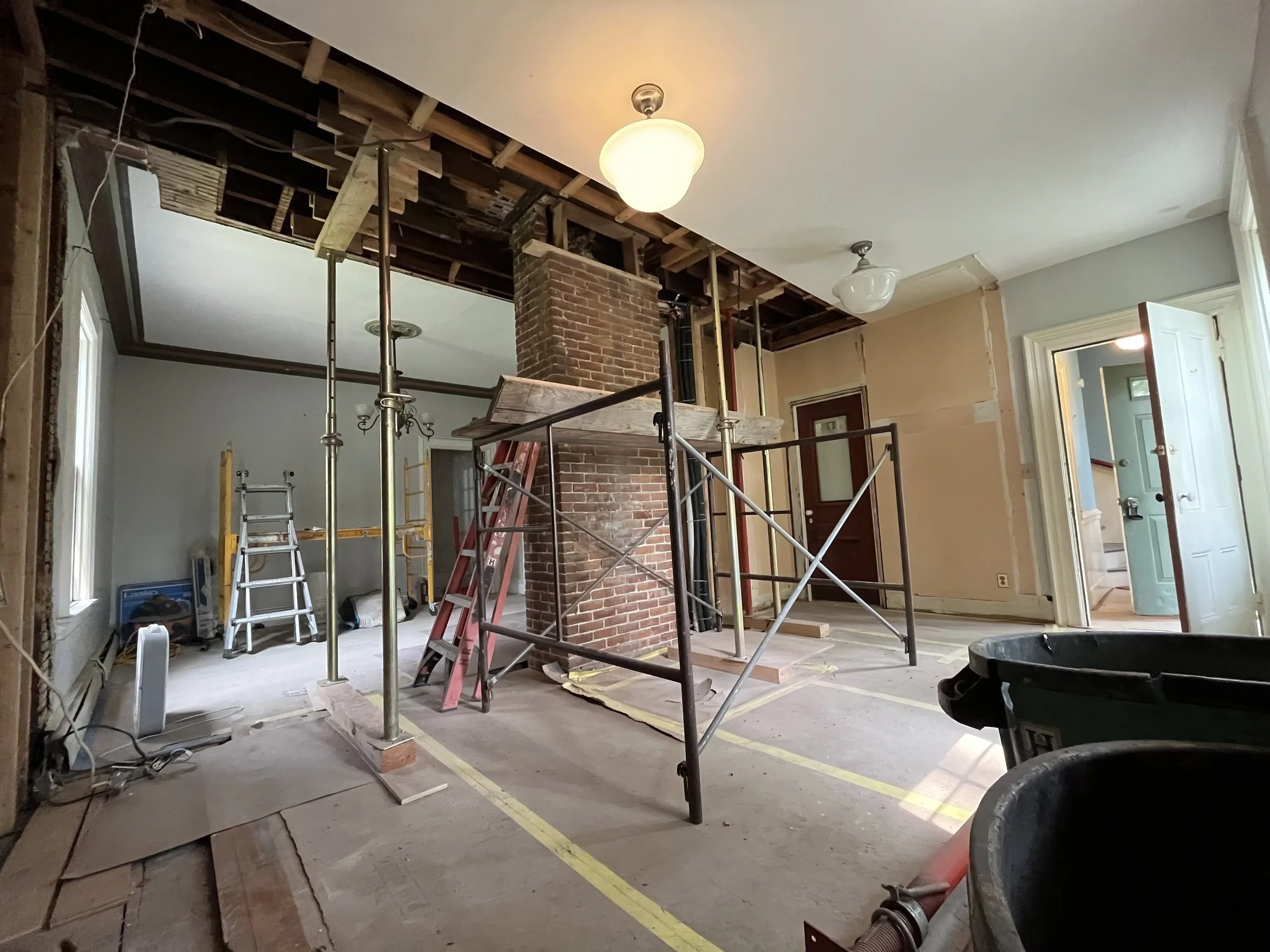
Kitchens and bathrooms are the most frequently remodeled rooms in any home. They work hard, are used every day, and often show their age sooner than any other space. In older and historic homes, these rooms may also carry decades of changes. This can include shifting tastes, incompatible retrofits, awkward layouts, or materials that have simply reached the end of their life.
Heritage Restoration designs and builds kitchens and bathrooms that respect a home's architectural character while meeting the demands of everyday living. The work blends practical design, traditional craftsmanship, and building science to create rooms that function well and feel right within the home they are part of.
How We Work
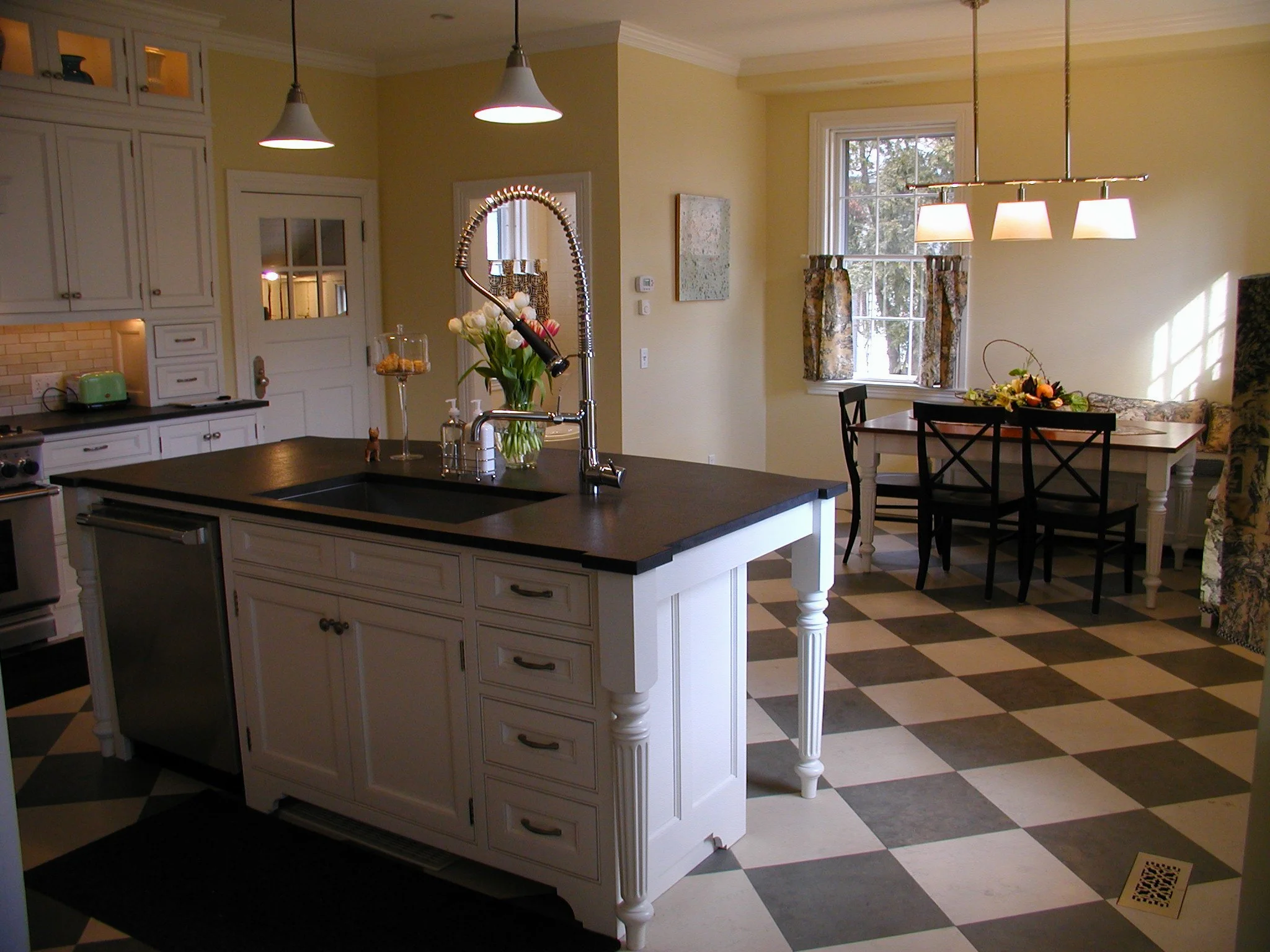
We start by understanding how the space is actually used, such as how you cook, gather, bathe, and move through the room. A kitchen that works in a new house often feels wrong in a house from 1790. The proportions are different, the light is different, and the materials that belong there are different. Good design in an old house starts with understanding the building itself.
From there, the work focuses on improving flow, storage, and usability while preserving or recreating the architectural details that give the room its character. Mechanical, electrical, and lighting systems are integrated carefully. Materials are chosen to complement the home's period and style. The intention is always the same, which is to improve the space without making it feel like it was imported from somewhere else.
The Millwork
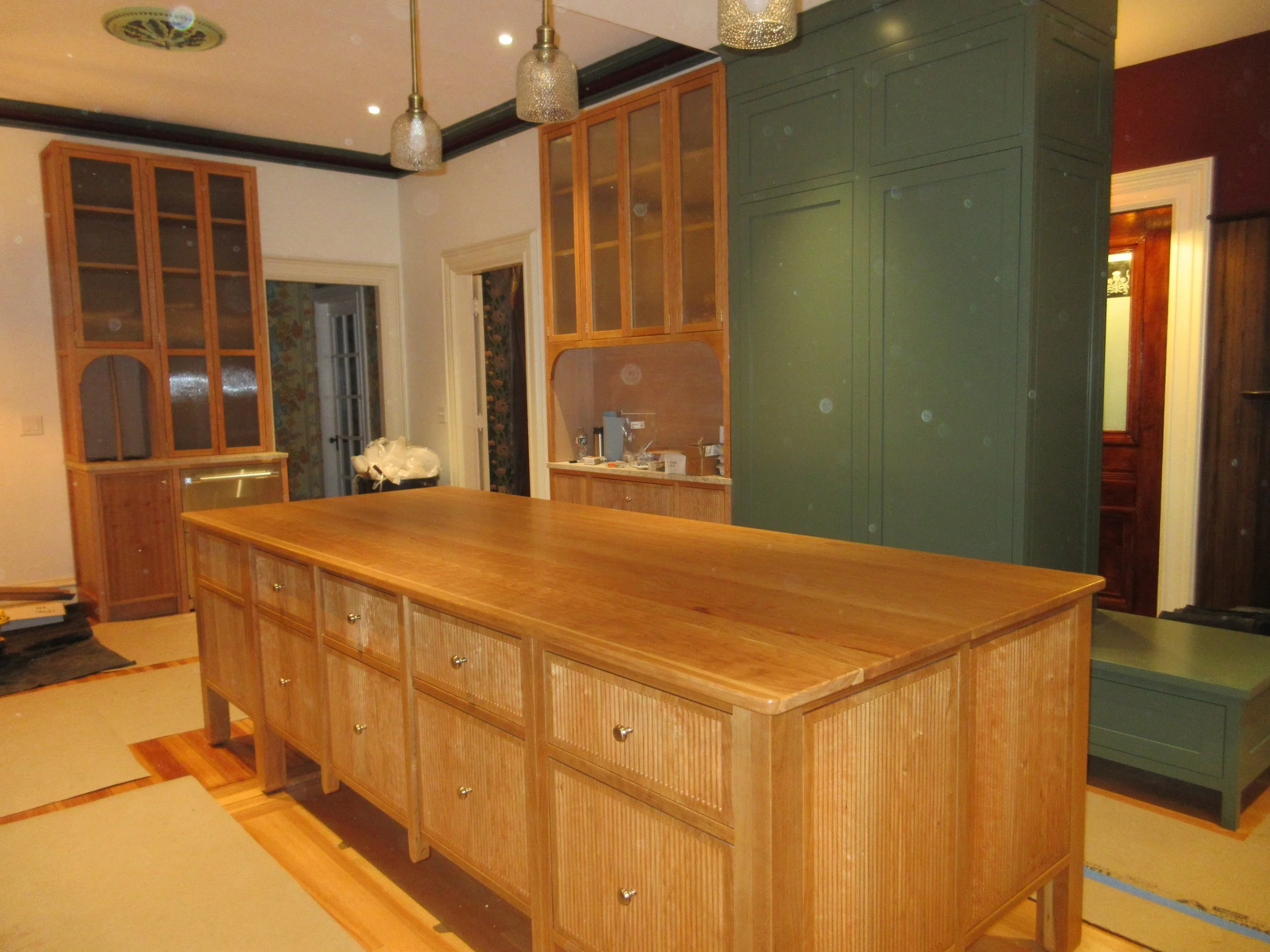
Our millwork team builds custom cabinetry and architectural details in our Providence shop. Whether the project calls for cabinetry in tiger maple or beech, a copper butler's pantry counter, a soapstone work surface, or a custom dining table, the work is fabricated specifically for the room and the house. Tile, fixtures, and hardware are chosen with the same care. Limestone, granite, subway tile, cast iron, and solid wood all have a long track record in old buildings, and that is what we reach for.
If you own an old house and want to talk through what a kitchen or bathroom project might look like, we are glad to hear from you.
Common Questions About Kitchens and Bathrooms in Old Homes
How do I update a kitchen or bathroom in an old house without ruining its character?
You start by figuring out what gives the room its character in the first place, then you protect those things while you improve everything else. That might be the window proportions, the trim, the original flooring, a built-in, or simply the way the room sits in the house. Once you know what matters, you can add the modern comfort, the storage, the lighting, the working appliances, without stepping on it. The mistake people make is treating an old kitchen or bath like a blank slate and gutting it down to a generic showroom layout. The better approach is to update the function while keeping the room in conversation with the rest of the house, so it still feels like it belongs to a building of its age rather than something dropped in from a catalog.
Can you have a modern kitchen in a historic home?
Yes, and you should. Nobody wants to cook in a museum, and a historic house can absolutely have a kitchen that works the way a modern kitchen needs to. The trick is in how you handle the details. Historic kitchens were not built as one continuous wall of matching cabinets; they were more a collection of freestanding pieces, a hutch, a worktable, a dresser. So a kitchen reads as old-house rather than showroom when you break up the long matching runs, mix materials and finishes, use furniture-style pieces, and conceal the modern appliances behind panels where it makes sense. Bathrooms give you even more freedom, because they were rarely original to these houses and have usually been redone several times already. You get full modern function. It just gets dressed in the language of the period.
Where can you add a bathroom in an old house?
The cheapest and smartest place is wherever you can get close to existing plumbing. A new bathroom placed back-to-back with an existing bath or kitchen, or stacked directly above one, can share the water and waste lines, which keeps the cost down. A brand new vent stack running across the house is one of the more expensive things you can do, so tying into what is already there matters. Beyond plumbing, the usual spots in an old house are an oversized closet, the space under a staircase, a former dressing room, or an attic area near a top-floor bedroom. A half bath needs only about three feet by six, and a full bath around five by eight, so you often have more options than it first appears. Old houses were frequently built with a single bathroom for the whole family, so adding one is one of the most common things owners ask us about.
What makes a kitchen or bathroom period-appropriate?
It is less about copying a specific year and more about capturing the visual language of the era. In a kitchen that often means leaning away from the continuous built-in look, since freestanding furniture was the norm before the twentieth century, and choosing work surfaces that fit the period. Continuous stone counters are a modern idea, while soapstone, slate, wood, and tile are more honest to an old house, and soapstone and slate have been quarried in New England for well over a century, so they are genuinely regional here in Rhode Island. In a bathroom, the period cues are things like white porcelain fixtures, a pedestal or console sink, hex or subway tile, beadboard wainscot, and simple cross-handle faucets in brass or nickel. None of it has to be an exact reproduction. It just has to feel like it grew out of the house rather than fighting it.
What are the biggest challenges of remodeling a kitchen or bath in an old house?
The honest answer is that nothing is square, level, or plumb, and you never know everything until you open the walls. Floors and walls move over a century or two, so cabinets, counters, and tile all have to be scribed and shimmed to fit a room that is not true. Then there is what is hidden inside. Old knob-and-tube wiring, galvanized or lead water lines, and aging cast-iron waste pipes often turn up at demolition and need to be brought up to current code, with dedicated circuits and proper protection in the wet areas. Venting is another common puzzle, since a lot of old baths have no exhaust fan, and old kitchens have no clear path to vent a range hood, and that has to be solved properly because trapped moisture is what peels paint and ruins plaster. This is exactly why we open things up carefully and plan for what we are likely to find, rather than being surprised by it halfway through.
Do historic district rules affect a kitchen or bathroom remodel?
In almost every case, no. Local historic district review is about the exterior of a building and what you can see from the street, not the inside. The Providence Historic District Commission says it plainly that interior alterations are not reviewed, and Newport works the same way. So your kitchen and bathroom layouts, fixtures, and finishes are your business. There are a couple of exceptions worth knowing. If a change reaches the exterior, like closing up or cutting a new window, that can trigger review, and if a property is under a preservation easement or is using historic tax credits, the interior work has to meet the Secretary of the Interior's Standards. Ordinary building, plumbing, and electrical permits always apply regardless. For most homeowners, though, the inside of the house is yours to make work the way you need it to.

Custom kitchen with limestone floors and granite counters

Kitchen with subway tile back splash and custom stove vent

Custom cabinets with granite counter top and limestone tiles
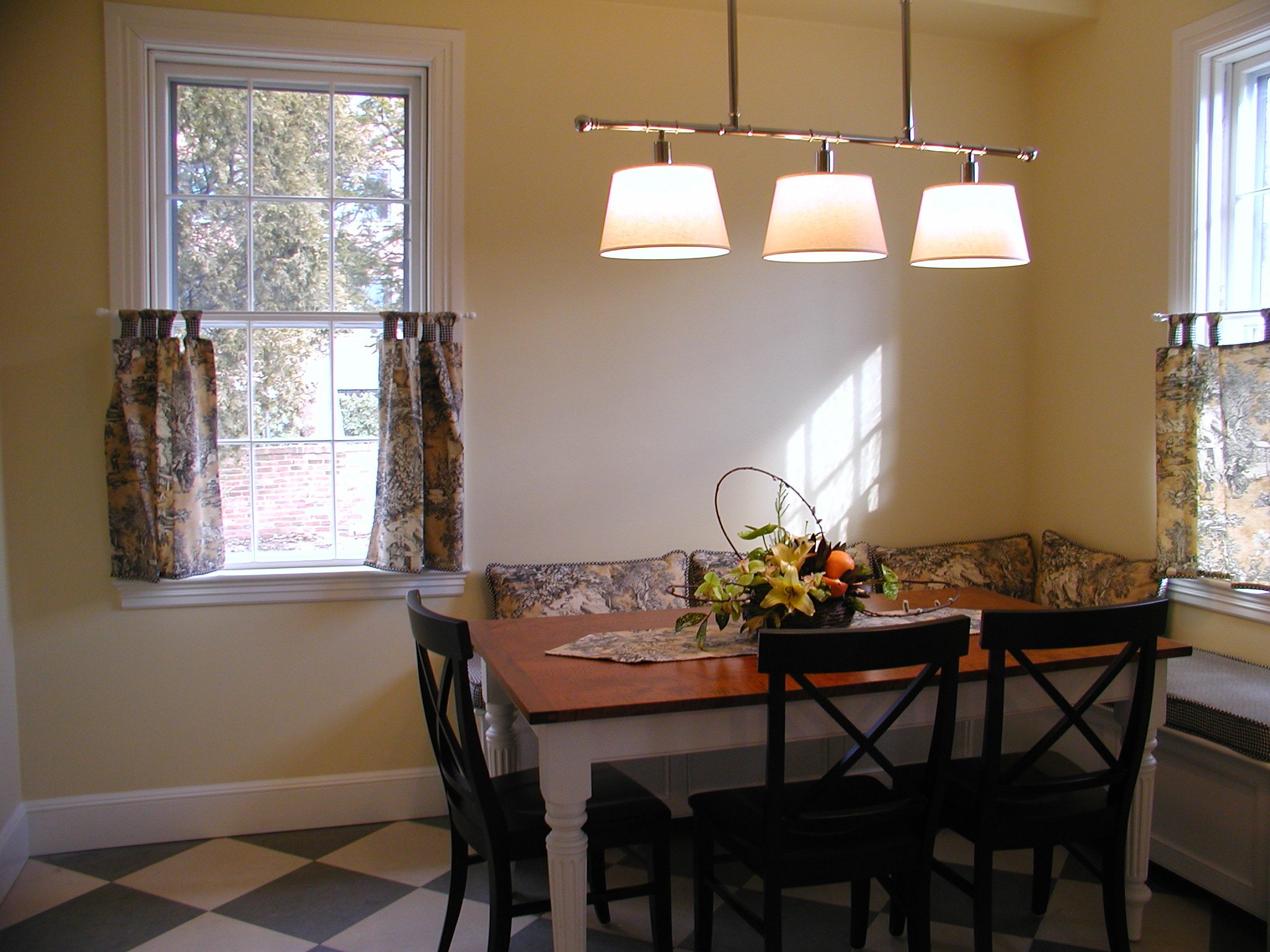
Dining area with custom tiger maple table

Custom folding table

Copper butler's pantry counter top

Bathroom with cork floor, glass tile ceiling, limestone wall tile, ceiling tub filler

Israeli limestone tile with granite counter top

Ceiling tub filler with glass tile

Farmer's sink and granite counter
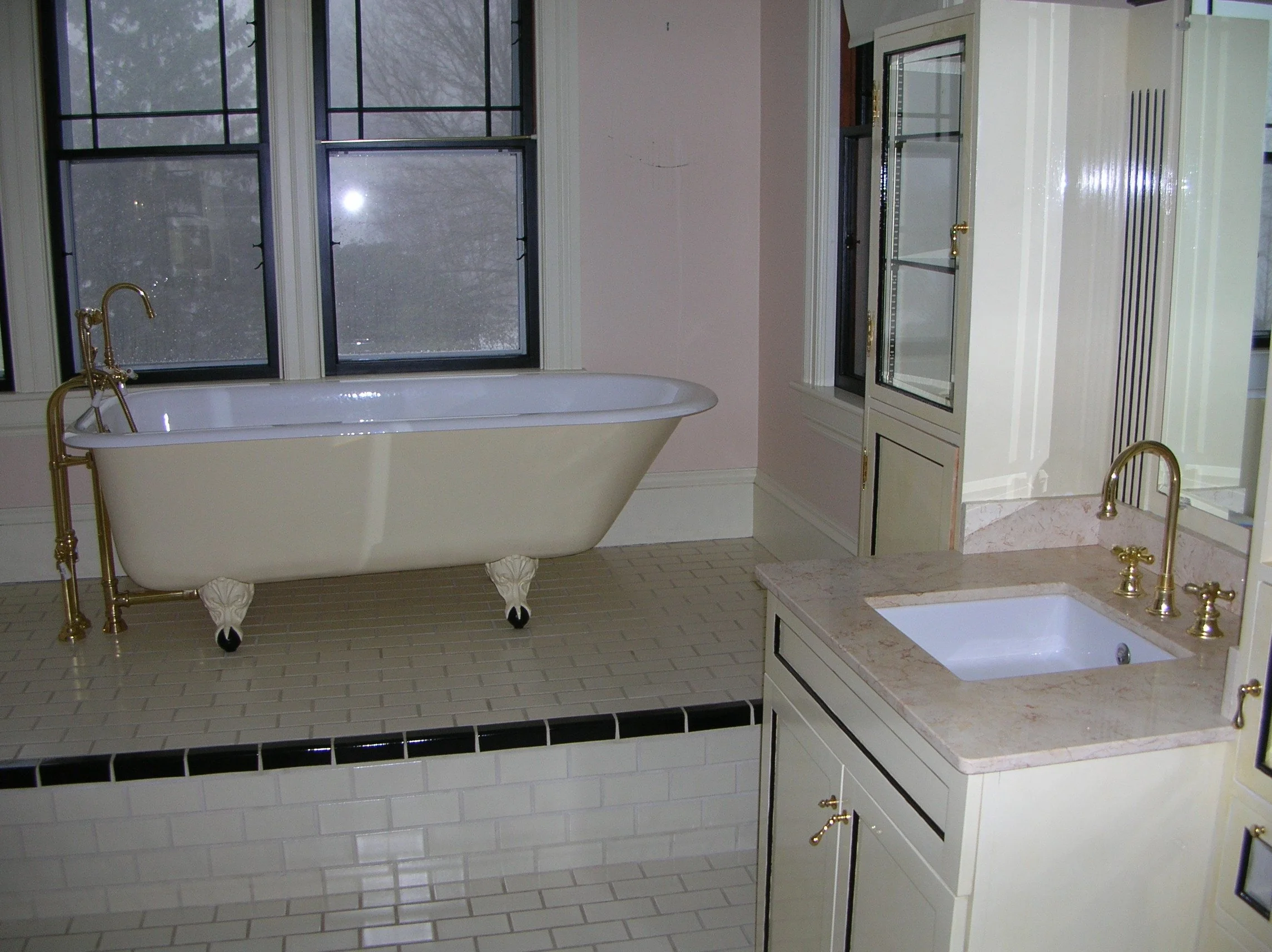
Claw foot slipper tub, subway tile, limestone sink counter top

Half bath with subway tile

Beech counter top, custom cabinets

Custom mahogany butler's pantry with granite countertops

Soap stone counter with custom cabinets