

Historic Door Restoration
Doors are among the most expressive elements in an old building. They frame the front of a house, define the rooms inside it, and show their craftsmanship in the joinery, the proportions, and the details. Historic doors were built to operate smoothly, seal properly, and provide security. Over time, paint buildup, settlement, and poor retrofits wear that performance down, but the door itself is almost always worth saving.
Heritage Restoration repairs, restores, and reproduces doors using methods that respect how they were originally built while bringing back their function and durability.
Our Approach
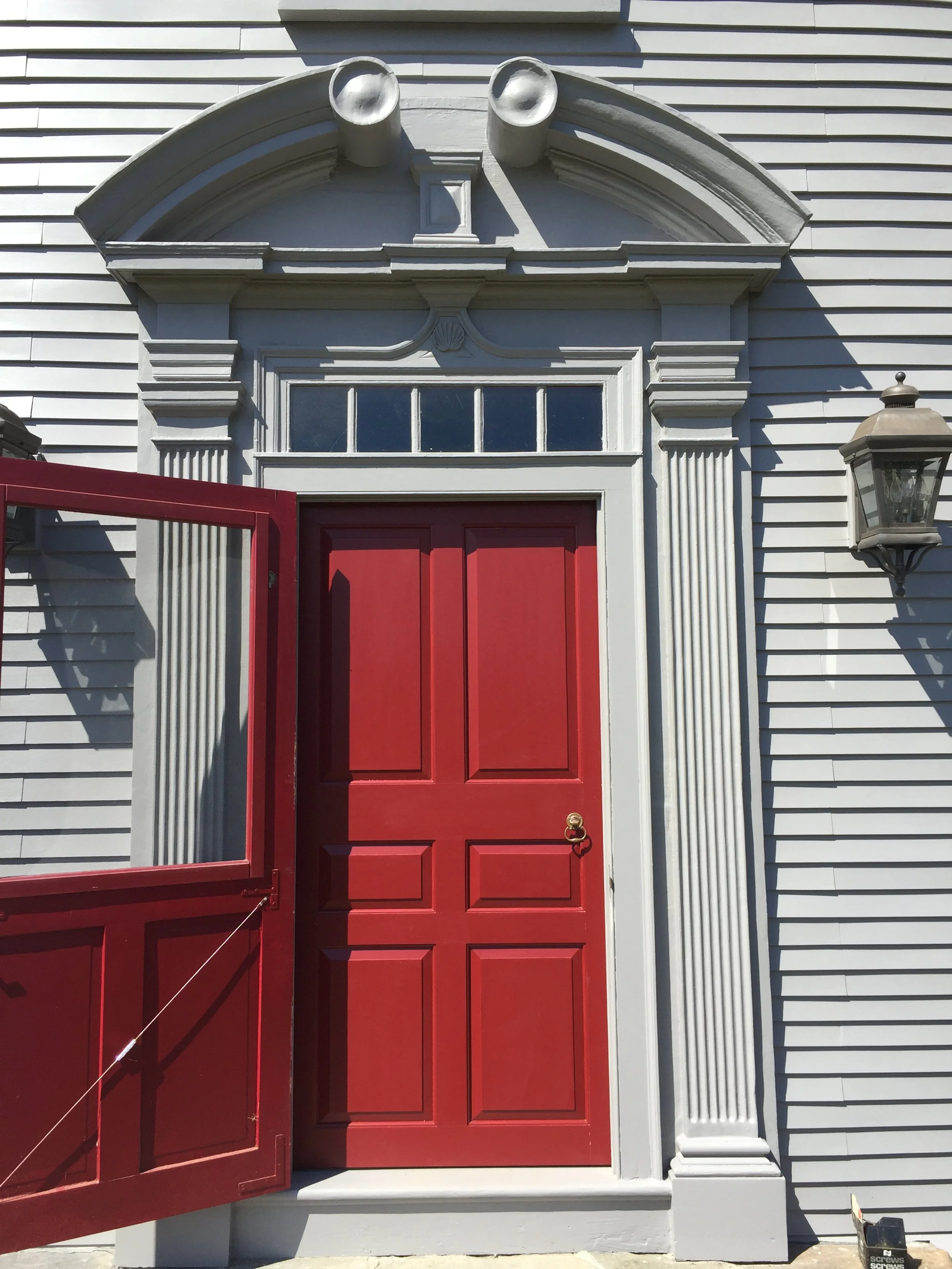
We start by looking at the whole system, the door, the frame, the hardware, and the structure around it, to understand how it was designed to work and where it is failing now. A lot of the common problems, like sagging hinges, worn thresholds, sticking jambs, or doors that no longer line up, can be solved through careful adjustment and targeted repairs rather than replacement.
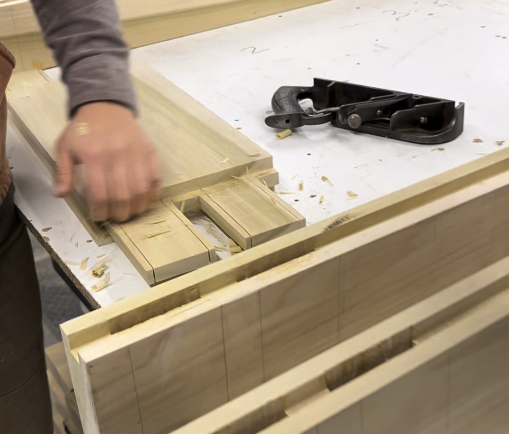
When deeper work is needed, we use traditional joinery, including true mortise-and-tenon construction, to bring back the door's strength. The priority is always to keep the original material and rebuild only what genuinely has to be rebuilt.
What We Do
Our door work covers the full range of what an old door might need:
Surveys and documentation of each door and frame, recording condition, function, and weather exposure, so owners can prioritize the work
Tune-ups and adjustments, including removing excess paint, easing edges, adjusting hinges and stops, and improving hardware fit
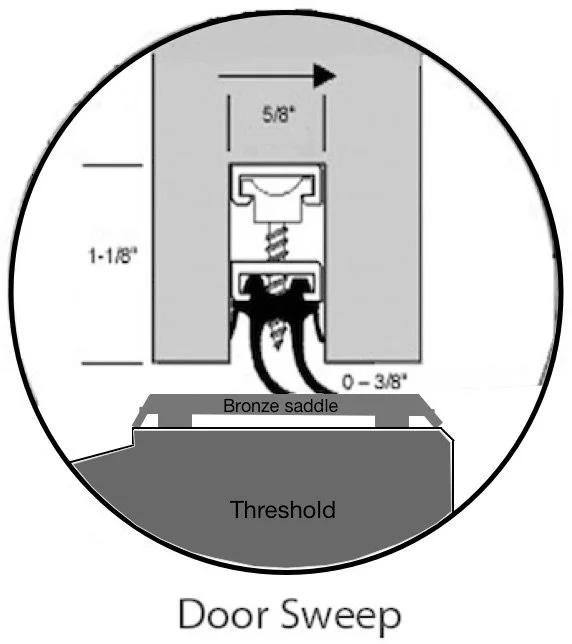
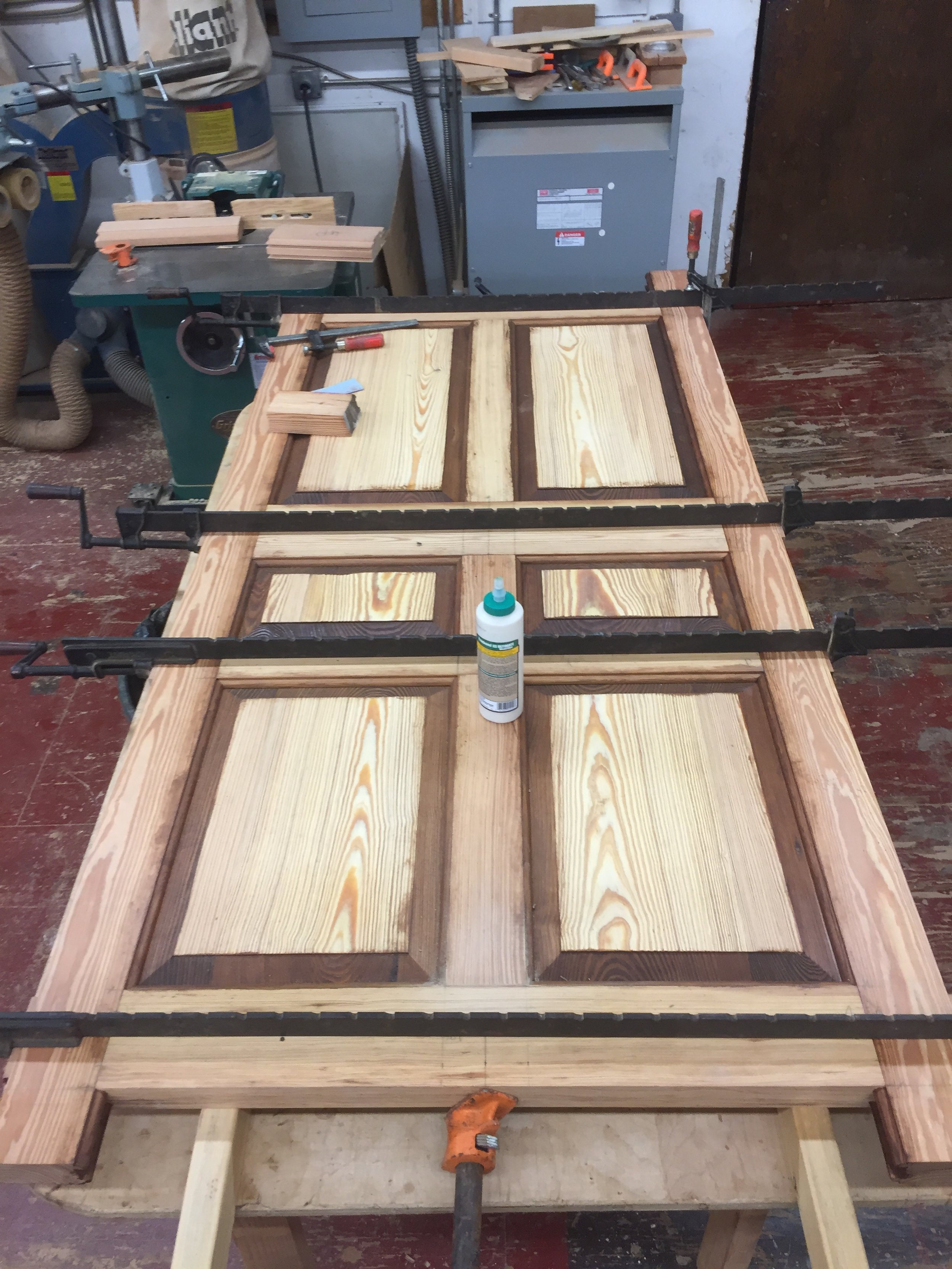
Full restoration, repairing or replacing damaged rails, stiles, panels, and moldings, rebuilding mortise-and-tenon joints, adding weatherstripping, and restoring smooth operation
Reproduction doors built to match when an original is missing or beyond saving, including exterior entry doors, interior passage doors, paneled doors, screen doors, and storm doors
Hardware repair and integration for historic locks, knobs, and hinges, fitting modern hardware sensitively when it is required
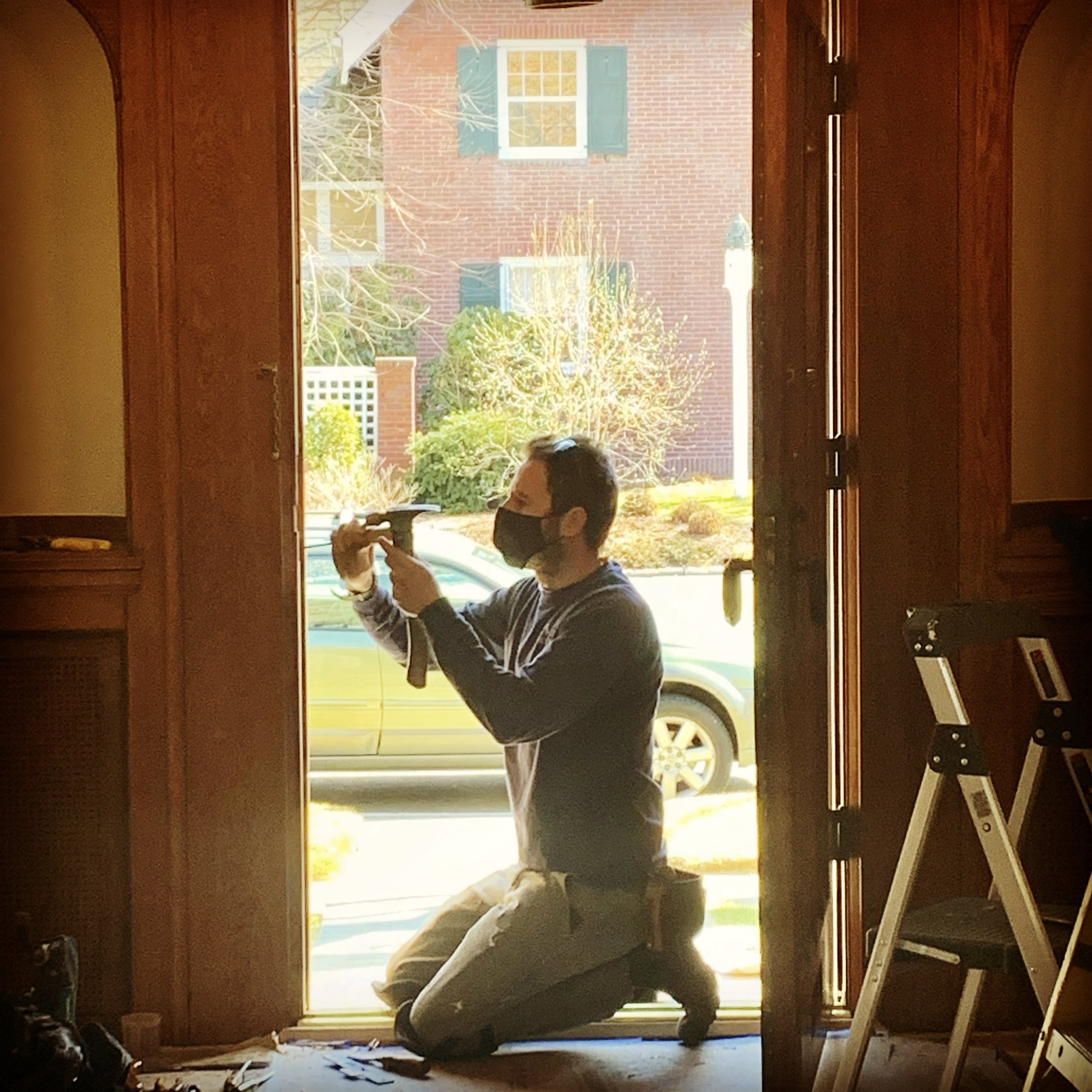
Onsite repairs such as resetting frames, fixing sills and thresholds, and addressing rot, with lead-safe refinishing coordinated when needed
Why Restore Instead of Replace
A historic door is built from dense, stable old-growth wood and assembled with joinery designed to be taken apart and repaired. A modern replacement is usually a veneer over a hollow or engineered core, built to be thrown out rather than fixed.
Restoring the original keeps the better material, the better performance once it is properly weatherstripped and adjusted, and the architectural character that a reproduction can approach but never fully replace. In most cases, a restored door works as well as or better than a new one, and it lasts far longer.
Why Mortise-and-Tenon Joinery Matters
Our millwork team uses true mortise-and-tenon joinery for both restoration and reproduction. It is how doors were built for centuries because it works.
Wood-to-wood joints that are properly cut and fitted resist movement and hold up over time, which matters in New England where doors expand and contract with the seasons. Those joints are what allow a door to be repaired generations from now instead of being thrown away, and they are essential on large exterior doors, paneled systems, and doors that get used hard every day.
Common Questions About Historic Doors
Are old doors worth saving?
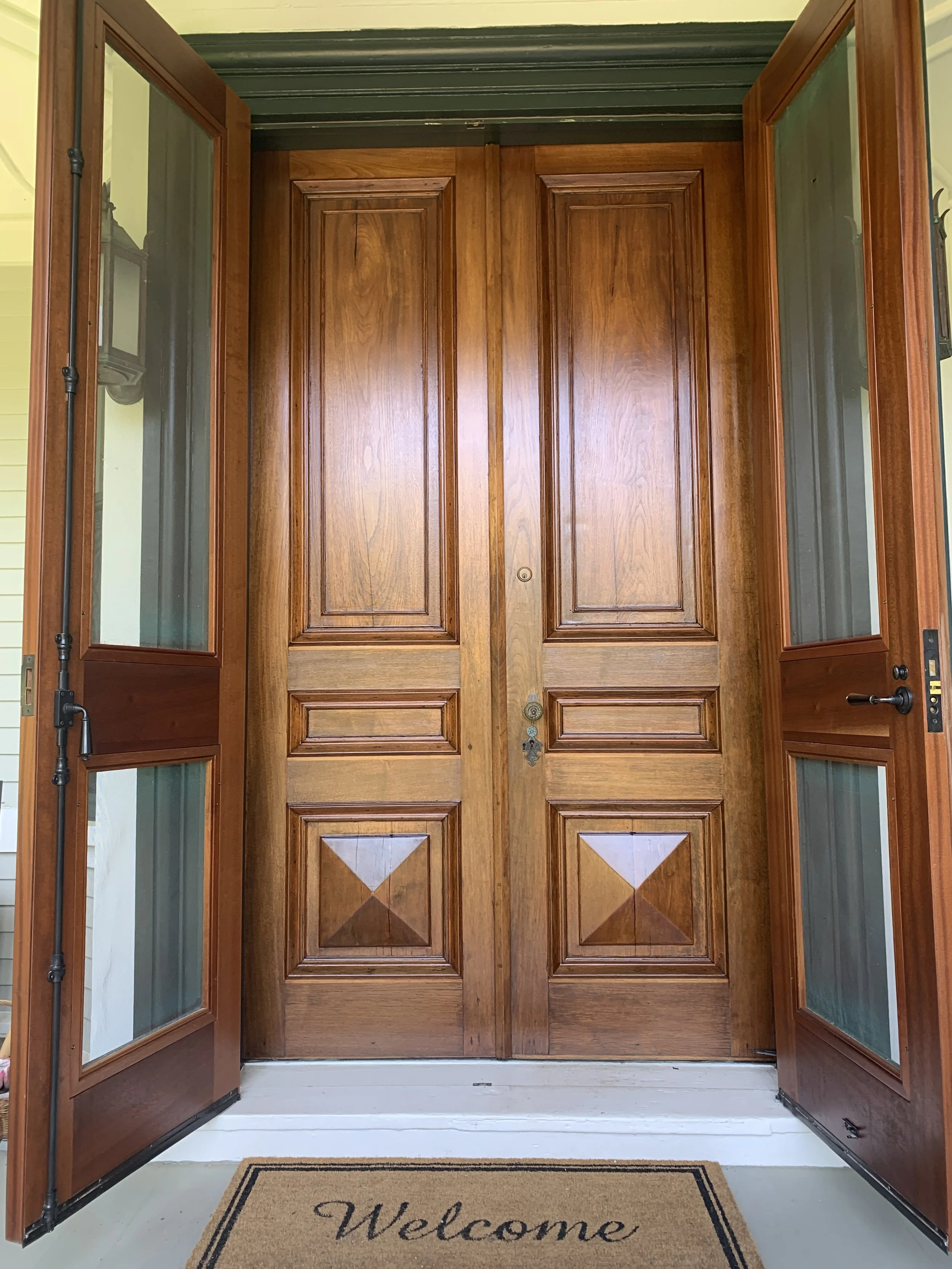
Almost always, yes. Doors in old houses are typically solid wood, often old-growth lumber that is denser and more stable than anything you can buy today. Many also have details you cannot replace, like raised panels, carved profiles, or original glass. Compared to a modern hollow-core or veneered door, an old door is simply a better object, and it can be repaired rather than discarded. Unless a door is structurally gone, restoring it is usually the better decision for both the building and the budget.
Why does my old door stick or refuse to close?
Usually one of a few things. The most common is loose hinge screws, especially in the top hinge, which carries the most weight. When those screws loosen their grip, the door drops and starts rubbing the frame. Humidity is the next most common cause, since wood swells in damp weather, and the edge of the door begins to catch. Decades of paint buildup and the natural settling of an old house can both throw a door out of alignment, too. Thankfully, most of these are fixable through adjustment rather than replacement, which is exactly the kind of work we do.
Can old door hardware be saved?
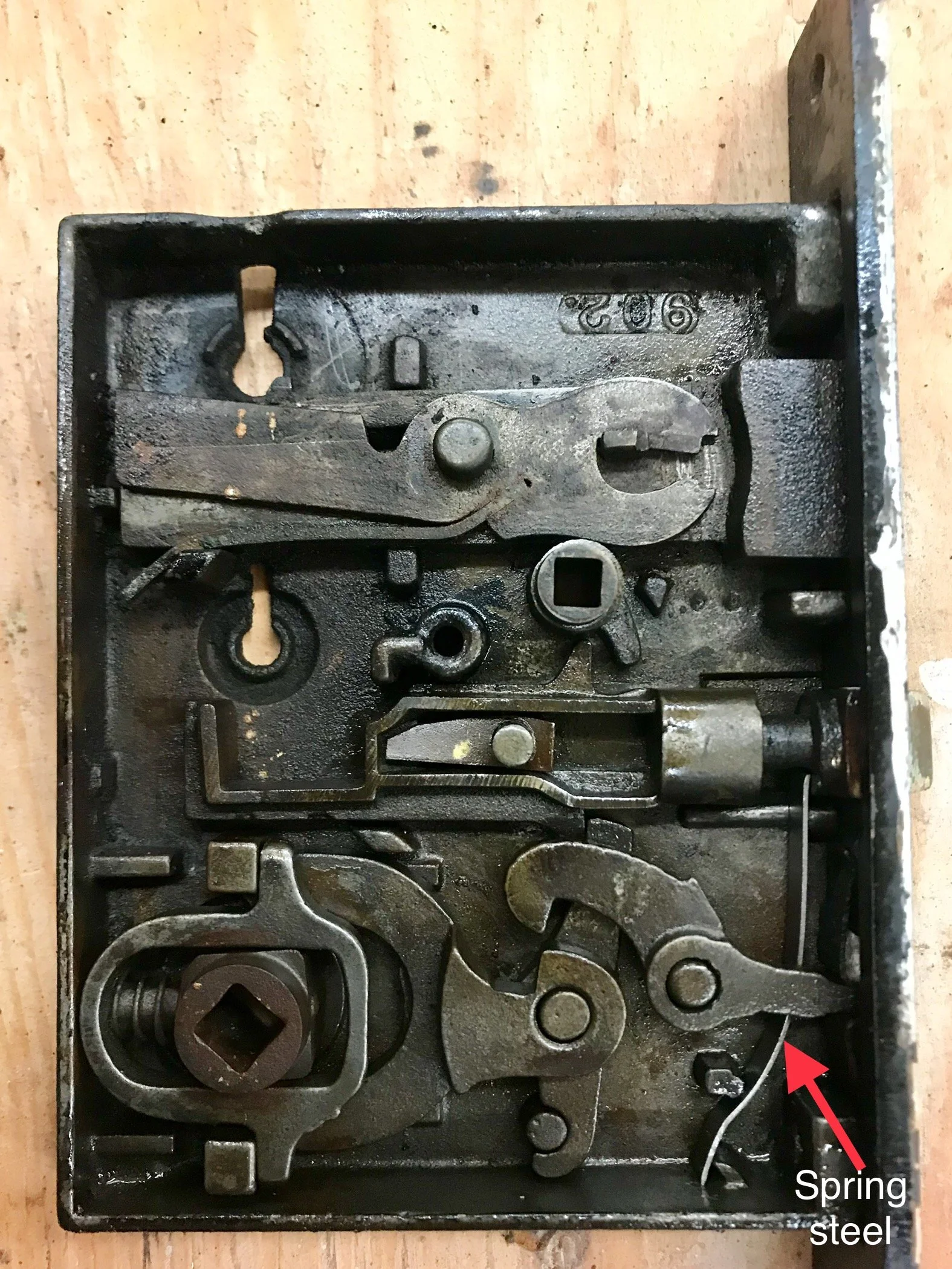
Usually, yes, and it is worth saving. Original mortise locks, knobs, and hinges are often far better made than modern equivalents, and the patina they have developed is part of what makes an old door feel right. We repair and refit historic hardware whenever it can be brought back. When a piece is truly missing or beyond repair, we look for period-appropriate replacements or integrate new hardware in a way that keeps the door's traditional appearance intact.
Should I strip and refinish my old door, or just paint it?
It depends on the door and what is under the existing finish. A stain-grade door with good wood and nice detail is usually worth stripping and refinishing so the wood shows. A door that was always meant to be painted, or one with many layers of old paint, is often best carefully prepped and repainted. One important note for any house built before 1978: old door paint very likely contains lead, so stripping and refinishing should be done with proper lead-safe practices. We handle that as part of the work.